





Originally developed in the 1970s by James O. Prochaska and Carlo C. DiClemente, the Stages of Change model has been in use for several decades. In that time, researchers have found that the Stages of Change model can be useful when applied to addiction treatment. From helping individuals with substance use disorders to providing a framework to quit smoking, or any other addictive behavior, this model has proven efficacious.
Let’s explore how you and your organization can apply the Stages of Change model to your addiction treatment programs.
What is the Stages of Change model?
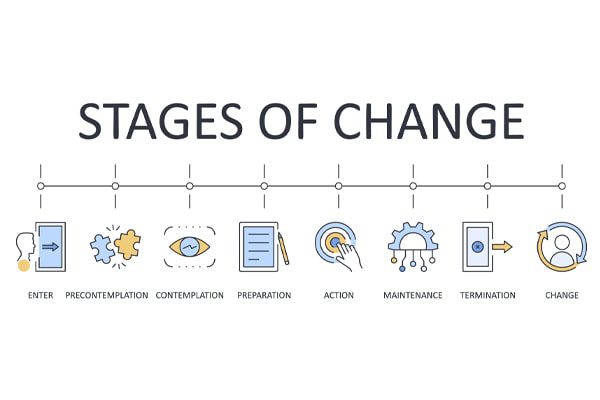
The Stages of Change model outlines the various stages individuals undergo when considering and making alterations in their behavior.
The Stages of Change, also known as the Transtheoretical Model of Behavior Change, encompasses six distinct phases:
- Precontemplation stage: During this stage, individuals may lack awareness of or underestimate the necessity for change. They might exhibit resistance or have limited awareness of the issue.
- Contemplation stage: Individuals acknowledge the need for change but remain uncertain about taking action. They may assess the advantages and disadvantages of making a change.
- Preparation stage: Individuals are prepared to initiate behavior change within the next 30 days. They may plan specific steps towards change and gather necessary resources.
- Action stage stage: This stage involves readiness to change and the actual implementation of the planned changes. Individuals actively modify their behavior, environment, or both, and they intend on continuing this behavior into the future (defined as the next six months).
- Maintenance stage: Individuals enter the maintenance stage once successful changes have been implemented and maintained for six months. The goal of this stage is to sustain new behaviors and prevent relapse.
- Termination stage: At this stage, individuals have no desire to return to their previous behavior patterns and have little to no risk of relapse.
How to use the Stages of Change model to treat addiction
Now that we understand the basics of the Stages of Change model, let’s evaluate how individuals undergoing treatment for addiction will present as they make their way through the different stages and how to implement this model in your work.
Precontemplation stage
People in this stage might become defensive when confronted about the impact of their addictive behavior on themselves and others. Additionally, some individuals in this stage may attempt premature and ultimately unsuccessful changes, resulting in discouragement and further regression.
Conventional models of behavior change that focus on action and implementation often characterize individuals in this stage as resistant or lacking motivation to change. However, the Precontemplation stage offers optimism in treatment planning and the development of prevention and harm reduction programs. Providers should meet individuals where they currently stand, addressing their specific needs and concerns instead of dismissing or disregarding them.
Here are some possible ways that people remain stuck in Precontemplation:
- Reveling: “I like it the way it is.”.
- Reluctance: “I don’t need to change – not now, not ever.”
- Rebellion: “Mind your own business.”
- Resignation: “I feel hopeless and helpless.”
- Rationalization: “I’m fine. It’s not that bad.”
Contemplation stage
The Contemplation stage is reached when an individual becomes aware of their potential desire to modify a specific behavior within the next six months. Signs of this stage include a serious and growing interest in making a change. It is important to note that a significant number of individuals engaged in unhealthy behaviors find themselves in the Contemplation stage. Many people in this stage remain immobilized due to their ambivalence towards change.
Resolving this ambivalence is a crucial step in helping individuals progress towards taking action to modify their behavior. Assist individuals in examining both the advantages and disadvantages of maintaining the status quo and the benefits and drawbacks of making a change. It is essential to incorporate culturally relevant considerations that motivate change, as cultural competence is vital in understanding and addressing each client’s unique concerns. Ultimately, any change should be carefully considered with the client’s best interest in mind.
Preparation stage
By the time individuals reach the Preparation stage, the advantages of trying to overcome the addictive behavior outweigh the disadvantages, and they intend to act within the next month. You may observe a heightened level of commitment in the individual and a willingness to make a change.
Many individuals in this stage have previously made attempts to change their behavior but were unsuccessful in maintaining that change, often because they could not make it out of previous stages or they encountered unforeseen obstacles. Moreover, individuals in the Preparation stage may lack a well-defined action plan or the necessary commitment to execute their plan.
As a mental health practitioner, you can create a specific and acceptable action plan, along with a timeline for its implementation. Many conventional programs that focus on action-oriented behavior change are suitable for developing a change plan tailored to individuals in this stage.
Action stage
At this point, the individual has already progressed halfway through the process of behavior change within the Stages of Change model. They are willing to make a change and are committed to a readiness to change. It is likely that they have already developed a specific and acceptable action plan, complete with a realistic timeline for implementation. They may also have started considering potential barriers to their plan.
This stage is where the risk of relapse — and subsequently reverting to an earlier stage — is most prevalent. If an individual has not adequately prepared for change and fully committed to their chosen action plan, relapsing into the problematic behavior is likely.
It is important that providers remain adaptable and responsive to different problem-solving approaches. Providing various levels of support to the individual as they continue to implement their action plan can be beneficial. Implementing reward systems may also prove helpful, as rewards aid in building motivation and confidence while rewiring the brain’s reward pathways.
Maintenance stage
During this stage, individuals experience a sense of confidence in their ability to enact change, fueled by their ongoing commitment and the development of necessary skills to maintain their new behavior. The process of implementing the change becomes easier, requiring less effort as individuals seamlessly incorporate the new behaviors into their daily routines and establish a new sense of normalcy.
While long-term adherence is achievable during this stage, it is important to anticipate the possibility of setbacks. Although the risk of relapse is still present, it is considerably reduced. It is crucial to consider the availability of services or resources that address other contextual areas of the client’s functioning. Additionally, assisting the client in identifying and utilizing strategies to prevent relapse is essential.
What happens if relapse occurs?
When using the Stages of Change for addiction treatment, it’s important to recognize that while relapse isn’t officially one of the stages in the Transtheoretical Model (TTM), it can significantly challenge a person’s motivation and sense of self‑efficacy in addiction recovery. Feelings of blame and guilt often surface when someone reverts to previous addictive behaviors — highlighting that the issue is not simply substance use, but the larger challenge of behavioral change. DiClemente (2018) explains that the TTM reframes “relapse” as recycling, where an individual returns from a later Stage of Change to an earlier one.
Once recycling occurs, a person may revert to one of the pre‑action stages: some might lapse into Precontemplation, feeling defeated and hopeless; others may return to Contemplation or move back to Preparation, and then resume their journey through the remaining stages. The essence of successful recycling lies in perseverance and learning from what derailed the previous attempt — so that each “recycling” cycle strengthens, rather than undermines, long‑term recovery.
To reduce the chance that a slip becomes a long‑term relapse, re‑engagement in the change process — and renewed commitment to the Stages of Change for addiction treatment — can be crucial.
Even when determination seems to wane, extending hope and re‑framing relapse as a learning opportunity can rekindle motivation and recommitment. Here are some stage‑relevant tasks that can work as essential building blocks across the processes of change:
- Cultivating interest and concern about change
- Decision‑making that supports moving forward
- Planning and fully committing to actionable change
- Sustaining efforts with ongoing action plan revisions
- Integrating new behavior patterns into everyday life
- Encouraging self‑management and autonomy
- Fostering strong self‑determination
- Maintaining a balanced recovery perspective
- Embedding sobriety into one’s lifestyle
- Managing the reality of potential future slips or recycling
Additional relapse prevention approaches
Relapse prevention strategies span across the Stages of Change model, involving both individuals and, when appropriate, family or significant others. Family members can be powerful motivators and provide positive reinforcement or well‑meaning accountability that bolsters recovery efforts.
Central to navigating the Stages of Change is active engagement with stage‑appropriate Processes of Change, which bolster movement through each phase and support sustained progress. Recognizing the reality of recycling, effective substance use disorder (SUD) programs and policies must integrate relapse‑informed strategies. Tailoring interventions to be culturally sensitive ensures relapse prevention resonates with clients from diverse backgrounds.
Here are some more nuanced strategies worth emphasizing:
- Help clients develop and refine their unique skill sets, so they can maintain and adjust new behaviors as needed.
- Increase awareness of the cognitive, emotional, and psychological triggers that naturally emerge, tempting a return to substance use.
- Assist clients in identifying both new and evolving triggers, recognizing that what once triggered use may have changed over time.
- Help clients notice and challenge self‑defeating thoughts or behaviors, and reinforce their progress with positive praise when they break through such patterns.
Termination stage
During the termination stage, mental health practitioners play a pivotal role in ensuring that individuals have the necessary support and resources to sustain their recovery. One important aspect is helping clients develop relapse prevention strategies. This effort involves identifying high-risk situations and triggers that may lead to a relapse and assisting clients in creating effective coping mechanisms to navigate these challenges.
Strategies include connecting clients with support groups, such as 12-step programs or group therapy, where they can find encouragement, understanding, and shared experiences. Peer support can also prove immensely valuable during this stage, as individuals can learn from others who have successfully maintained long-term sobriety.
Mental health practitioners can continue to monitor and assess the progress of individuals during the termination stage. Regular check-ins and follow-up sessions can help identify any potential signs of relapse or difficulties in maintaining the behavior change. By staying engaged with clients, practitioners can provide ongoing guidance, motivation, and reinforcement of healthy behaviors.


The Stages of Change Worksheet
Change is hard for everyone, but living with mental health conditions only makes it harder. If your organization works with individuals living with substance use disorders, anxiety, depression, or other conditions that make creating change in their life difficult, we’ve put together this Stages of Change worksheet to help.
In this worksheet, you’ll find recommended strategies for guiding clients through each state outlined in the Stages of Change. We’ve also provided blank spaces so you can take notes on how your client is doing, their responses to your conversations, and more.
Download worksheet →
