






Obstetrical hemorrhage remains one of the leading causes of preventable maternal mortality worldwide and in the United States. According to the World Health Organization, severe bleeding after childbirth is responsible for approximately 27% of maternal deaths globally. In the U.S., maternal mortality rates have continued to rise over the past several decades, underscoring the urgent need for improved hospital readiness and standardized response protocols.
Recent media reports have brought the rise in maternal mortality to heightened awareness for every American. For hospital executives and clinical leaders, this trend represents not only a public health crisis but also a critical issue of patient safety, regulatory compliance, and organizational risk. For our mothers and their babies, we can do better. For healthcare organizations, the opportunity to improve outcomes is both measurable and actionable.
What is obstetrical hemorrhage?
Obstetrical hemorrhage refers to excessive bleeding during pregnancy, labor, delivery, or the postpartum period. It is most commonly defined as blood loss exceeding 1,000 mL or any blood loss accompanied by signs of hypovolemia within 24 hours after birth.
This condition is widely recognized as a leading cause of severe maternal morbidity and preventable death, particularly when early recognition and rapid intervention protocols are not in place.
Why obstetrical hemorrhages matters for hospital leadership
Obstetric hemorrhage and hypertensive disorders make up more than 40% of maternal deaths globally. Obstetrical hemorrhage is a leading cause of mothers dying and suffering severe injuries, yet many of these outcomes are preventable with the right systems in place.
The Alliance for Innovation on Maternal Health (AIM), a national program supported by the U.S. Department of Health & Human Services, estimates that a significant proportion of maternal deaths could be prevented through consistent implementation of safety bundles and standardized care processes.
For hospitals, this translates into:
- Reduced risk of sentinel events
- Improved quality metrics and accreditation readiness
- Lower malpractice exposure
- Better patient outcomes and reputation
As many as 90% of deaths due to obstetrical hemorrhage may be preventable when hospitals are adequately prepared and teams are trained to respond effectively.
The importance of accurate blood loss measurement
There are steps hospitals can take to prepare for obstetrical hemorrhage. Perhaps the most important is Quantification of Blood Loss (QBL) after every delivery.
In studies, visual estimated blood loss (EBL) consistently resulted in an underestimation of large volumes greater than 1,000 mL, and with smaller volumes, EBL resulted in overestimation compared to direct measurement. Accurate and timely recognition of excessive blood loss by Labor & Delivery staff is vital for saving mothers from bleeding to death or suffering undue harm.
From an operational standpoint, failure to accurately quantify blood loss can delay escalation protocols, increase the likelihood of adverse outcomes, and negatively impact hospital quality reporting and patient safety metrics.
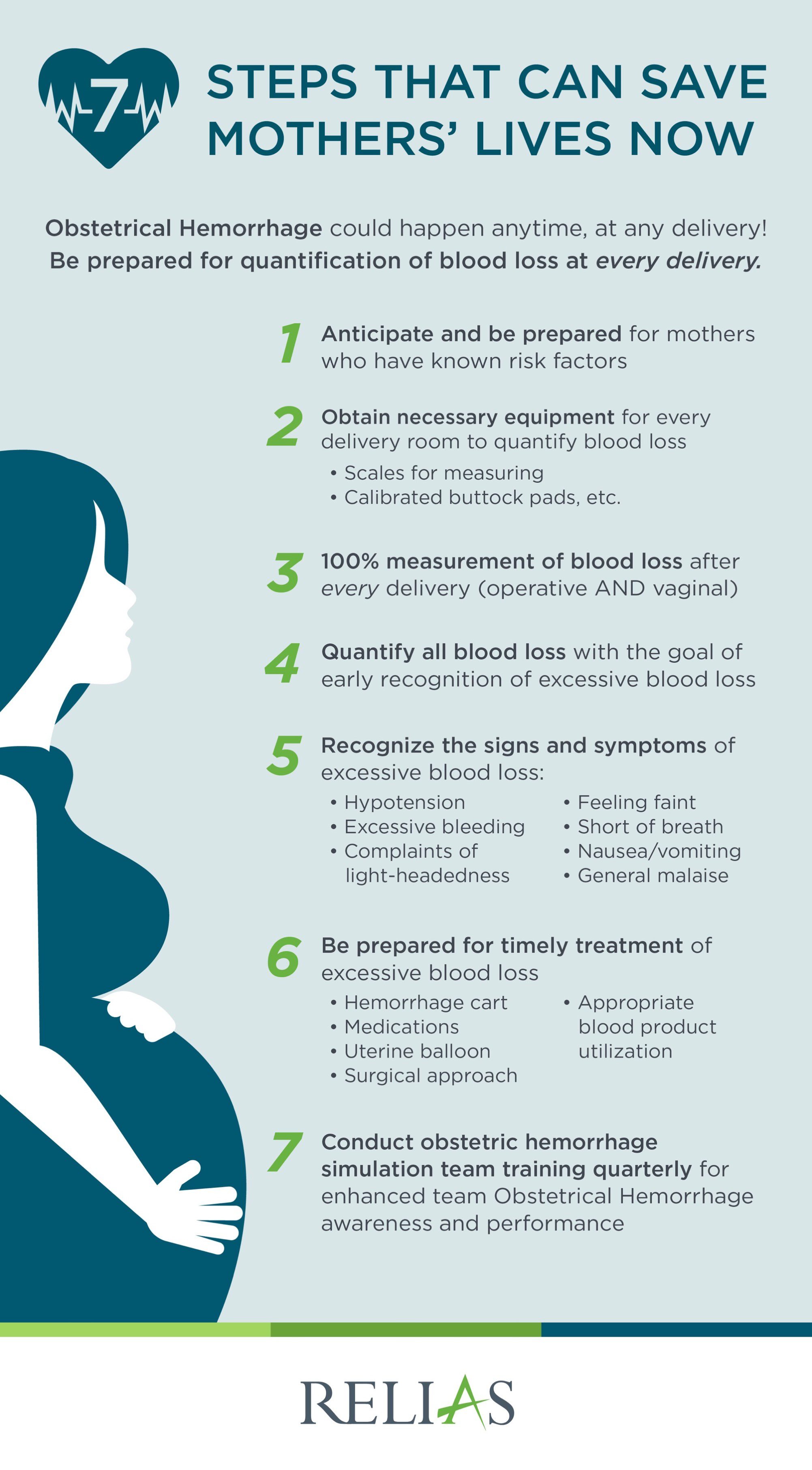
7 steps to save lives during obstetrical hemorrhage
Below is an infographic with information that your staff can use to help save mothers when dealing with obstetrical hemorrhages.

We can help
Relias has assembled a Saving Mothers' Lives Now Toolkit with valuable resources to help nurses, providers, hospitals and health systems on their mission to reduce maternal mortality and morbidity. This includes information on our partnership with the Association of Women’s Health, Obstetric and Neonatal Nurses (AWHONN) and our Mothers and Babies First project, which is bringing together the innovation of online learning and the impact of instructor-led education. This large-scale research initiative is focused on developing best practices for implementing a new blended learning model to maximize our impact on perinatal safety.
Check out our Maternal Mortality Toolkit →
