






In today’s digital-first world, a healthcare organization’s reputation is shaped as much online as it is in the exam room. Patients don’t just rely on word of mouth anymore — they turn to Google, online review sites, and social media to inform their choices. A strong reputation can be a growth engine, while a weak or unmanaged one can erode patient trust and volume. Reputation management isn’t about damage control — it’s about proactively shaping perceptions by delivering great experiences and amplifying them across the right channels. Let’s review five reputation management best practices to manage and strengthen your healthcare organization’s reputation.
Make feedback easy and timely
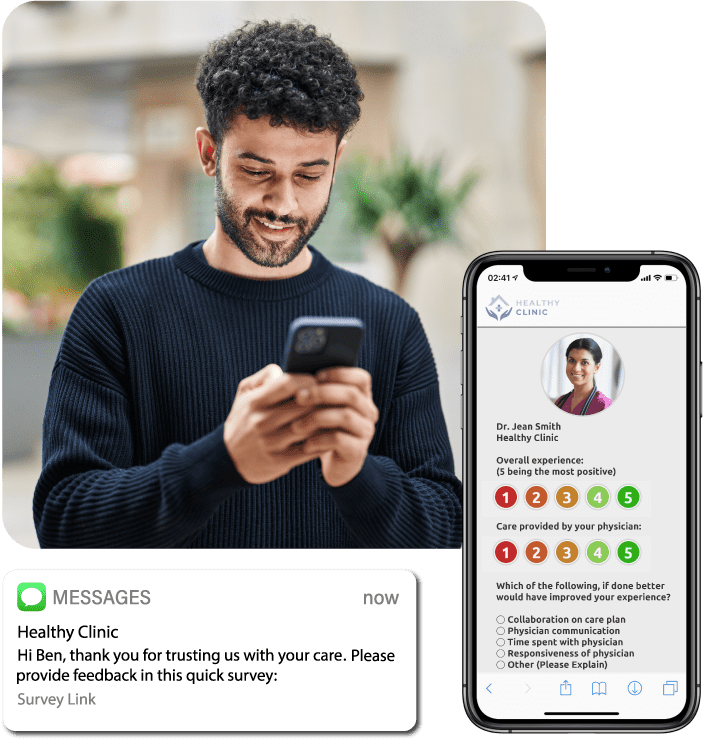
The best way to build a strong online reputation is by starting with the patient voice. Use experience management tools to collect feedback at key points along the care journey—ideally within hours of a visit, when the experience is still fresh. The more frictionless the process (e.g., mobile-friendly surveys), the more likely patients are to respond.
By gathering real-time insights, you can quickly identify positive trends and resolve issues before they escalate to public forums.
Ask satisfied patients to share their experience
Patients are often willing to leave a positive review—they just need a prompt. After a positive interaction or survey response, follow up with an automated message asking them to post a review on sites like Google, Healthgrades, or Yelp. Experience platforms can streamline this process, ensuring the request is timely and targeted to satisfied patients, helping to improve review volume and quality organically.
Monitor and respond to reviews — publicly and privately
Engaging with online reviews shows patients that you care about their feedback. Thank reviewers for positive comments and address concerns with professionalism and empathy. For negative reviews, avoid defensiveness; instead, acknowledge the issue and offer to continue the conversation offline. This demonstrates accountability and signals to other prospective patients that you’re listening and responsive.
Identify trends and take action
One bad review is a data point. Consistent themes are an opportunity. Use your experience data to identify common concerns — like long wait times or unclear discharge instructions — and make targeted improvements. Over time, these operational changes help shift the narrative and reduce the frequency of negative reviews.
Align reputation with brand promise
Reputation management isn’t just a marketing activity—it’s a reflection of your culture and operations. Ensure that what patients see online matches what they experience in person. A consistent, value-driven patient experience reinforces your organization’s brand and builds long-term trust.
Final thoughts on these reputation management best practices
In a competitive healthcare environment, your reputation is one of your most valuable assets. By combining experience management with a thoughtful reputation strategy, you can amplify your strengths, address concerns proactively, and build a brand patients can trust — both online and off.

Improve Patient Experience and Drive Quality Outcomes
Relias Experience Management optimizes care improvement through real-time data insights, patient feedback, and prescriptive interventions to identify and close gaps in care delivery and patient experience.
Learn more →
