






In today’s healthcare environment, knowing how to improve patient experience is more than a competitive advantage — it’s a necessity. Patients expect more than quality clinical care; they want to feel heard, respected, and involved in their healthcare journey. And with value-based care models, consumer-driven expectations, and transparency tools shaping the future, healthcare organizations must prioritize every interaction that shapes the patient experience.
Improving patient experience isn’t just about checking boxes on satisfaction surveys. It requires a holistic approach that includes real-time feedback, staff responsiveness, and proactive service recovery. From the moment a patient enters your facility to the time they leave — and beyond — their impressions matter. But to make meaningful change, leaders need more than anecdotes. They need data, insight, and action.
5 strategies to improve patient engagement
Let’s walk through five practical strategies for how to improve patient experience, from investing in digital engagement tools to creating a learning culture within your organization. Whether you’re a hospital executive, patient experience leader, or frontline care provider, these proven approaches can help you build trust, drive outcomes, and elevate every patient encounter. Let’s explore how to move beyond traditional feedback methods and embrace a more connected, responsive, and patient-centered model of care.
1. Invest in patient engagement solutions
Healthcare leadership continues to acknowledge the importance of having adequate information management systems in place to monitor quality, experience, and safety metrics within their organizations.
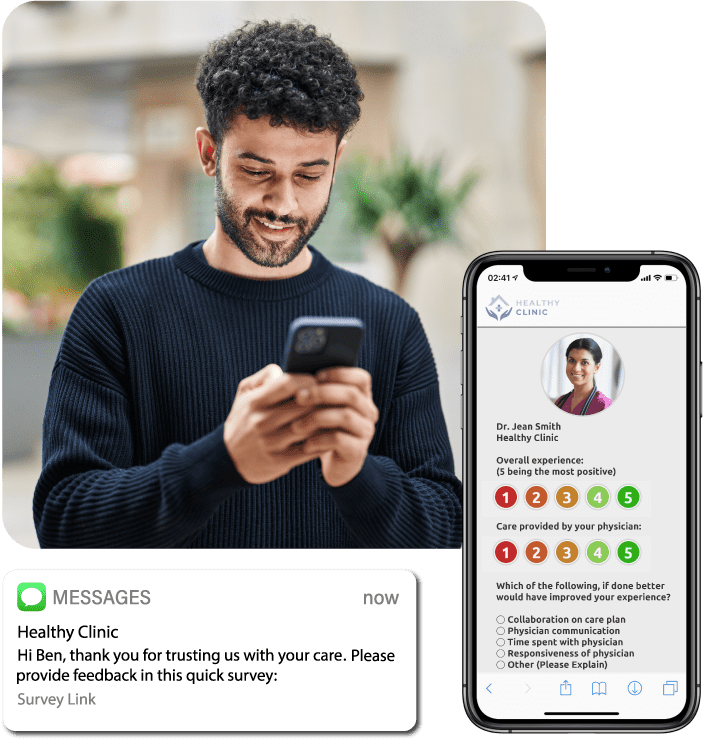
Critical information often comes from leader rounding, which serves a valuable purpose in understanding how to improve patient experience and should continue. However, surveys and digital patient engagement solutions can capture a deeper pool of insights. Leveraging technology to administer surveys offers benefits such as:
- Anonymity: Detaching names from surveys encourages more honest responses.
- Scalability: Surveys can be administered to all patients who receive medical care in your facility rather than a small sample, providing a more accurate picture of the average experience.
- Standardization: Every respondent receives the same questions in the same order, making it simpler to compare responses and analyze data.
- Convenience: Surveys can be conducted after the patient is discharged, making it easier for them to participate.
Your director of patient experience is critical to identifying the right questions to ask patients and collecting measurable data through real-time surveys. Continually using insights from this data to inform service recovery drives improved quality of care, enhanced patient loyalty, continuous improvement, compliance with regulatory requirements, and demonstrated accountability to patients and stakeholders.
2. Establish real-time transparency
Executives also noted that a quarterly review of metrics covering patient satisfaction in healthcare doesn’t cut it when holding larger discussions about how to improve patient experience. Though you may receive transparent feedback from a patient, you’re waiting up to three whole months to hear it and react to it, leaving the door open to repeating the same avoidable mistakes. No one has time for that. Except the competition, who will gladly scoop up the patients you’ve left behind.
Additionally, this approach facilitates negative word-of-mouth reviews; imagine one patient’s frustration when they have a poor experience, share that through their patient satisfaction survey, and then find out an acquaintance experienced the very same adverse event two months later.
Organizations are instead looking for real-time transparency into patient satisfaction scores and comments so they can not only respond to that patient promptly but also change the way they deliver care. Using digital platforms and patient engagement solutions not only transforms the healthcare experience but creates a rewarding environment for the care team.
3. Connect prior to discharge
Its common for healthcare staff to express frustration that they had no way to learn about a patient’s concerns until after the patient had been discharged. This unfortunate status quo is no longer a limitation. By investing in a real-time patient feedback and information management platform that automatically communicates patient concerns to on-duty teams, organizations can perform service recovery before patients even leave the hospital.
4. Develop a learning culture
Data is only meaningful in an organization that encourages and values continuous learning and professional development. A learning culture is led by people open to new ideas and perspectives. It promotes flexibility and innovation, provides a supportive environment, emphasizes ongoing improvement, and perhaps most important, focuses on outcomes.
The leaders pushing healthcare into a new age can only understand how to improve patient experience when they are unafraid to hear patient concerns and criticisms, are invested in evolving their operations, and are willing to implement short- and long-term solutions to the problems they uncover. And they must survey regularly with a platform that meets their PX needs.
To correctly leverage the data provided by patient engagement solutions, leaders must also ensure that team members feel a sense of psychological safety so they can share what went wrong during a patient interaction without fear of reprisal. Likewise, team members need to feel comfortable presenting innovative ideas to foster patient satisfaction.
5. Hear from patients in their own words
Many healthcare surveys limit patients to providing feedback on a numerical or multiple-choice scale, with no option to provide additional insight. While this may allow for easier benchmarking, it deters patients from supplying key details about why they gave a specific score or felt a certain way. If you want to truly learn how to improve patient experience, it’s essential that you give patients a way to provide open-text feedback.

Improve patient experience and drive quality outcomes
Optimize care improvement through real-time data insights, patient feedback, and prescriptive interventions to identify and close gaps in care delivery and patient experience.
Learn more →
