




Elders hold a revered position in Native American communities, serving as the keepers of cultural identity and the bearers of history, language, and traditions. Not surprisingly, elder care in Native American communities aligns with this deep respect. In many Native cultures, younger generations are taught to honor and care for elders, ensuring they remain connected to their communities and influential to the following generations.
The communal approach in Native American elder care is about more than just physical support — it also encompasses emotional and spiritual well-being. This article explores the challenges of providing elder care in Native American communities, the role of family and community, and how to effectively integrate hospice and palliative care.
Native American elder care must consider physical, emotional, and cultural needs.
Challenges facing elders in Native American communities
Because Native American communities face significant health disparities, providing care for Native elders presents additional challenges, such as:
Higher disease burden and lower access to care
According to the Centers for Disease Control (CDC), American Indian and Alaska Native (AIAN) elders experience higher rates of chronic diseases, such as diabetes, heart disease, and respiratory illness. Geographic isolation in some tribal areas makes access to healthcare and elder care services difficult, exacerbating these issues. Additionally, social determinants of health such as poverty, inadequate housing, and limited transportation add layers of difficulty for many aging Native Americans.
Insufficient caregiver support
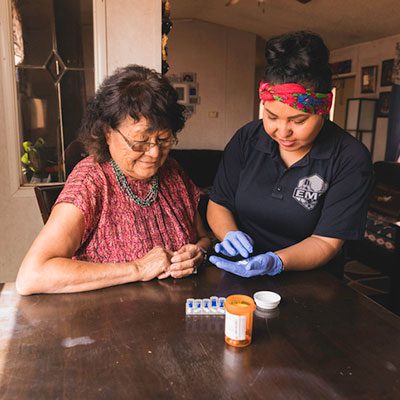
In Native American cultures, family and community are central to elder care. Unlike typical U.S. elder care systems, which often rely on nursing homes or institutional settings, Native American families traditionally provide care at home. This conveys honor to the elders and helps preserve the connection between generations. Family caregivers play a vital role, though they often face challenges such as limited financial resources, caregiver burnout, and the need for greater support services.
Mistrust of hospice and palliative care
Hospice and palliative care are critical services for elders, especially for those with chronic illnesses or terminal conditions. However, Native American cultural sensitivities around death and dying can sometimes create barriers to accessing these services. There may be a reluctance to discuss end-of-life care due to cultural beliefs or mistrust of outside healthcare systems. Integrating culturally appropriate hospice and palliative care — through services that respect traditional values and healing practices — can ensure that these elders receive compassionate and holistic end-of-life care.
Integrating traditional medicine with modern healthcare
Native American communities have a long history of using traditional healing methods, such as herbal remedies, prayer, and ceremonies, to address physical, emotional, and spiritual health. As healthcare systems work to develop or improve elder care services, it is crucial to acknowledge and integrate traditional practices into the care plan. Healthcare providers serving Native elders should recognize the importance of traditional medicine and collaborate with tribal healers when appropriate. This approach ensures that elders receive care that aligns with their cultural values and beliefs, ultimately leading to better outcomes.
Addressing the needs of an aging Native American population
With so many challenges to overcome, how can healthcare organizations best serve elder Native Americans and their families?
Better care for these populations requires a comprehensive approach that addresses both immediate healthcare needs and long-term support. Considerations must include preventive care to manage chronic conditions, mental health services to address depression and isolation, and long-term care options such as in-home support and tribal nursing homes.
Caregiver support: Strengthening the backbone of elder care
Family caregivers are the backbone of elder care in Native American communities, but they often face significant challenges. Caring for an elder can be exhausting, and many caregivers do so without adequate financial support or respite care. Providing caregiver education, financial assistance, and respite programs can help alleviate some of these burdens and ensure that caregivers can continue caring for their family members. Tribal governments and healthcare organizations can also play a key role in developing support systems for caregivers, including counseling services, caregiver training, and access to medical supplies.
Culturally appropriate long-term care options
As the Native American elder population grows, there is an increasing need for culturally appropriate long-term care options. In recent years, some Native communities have developed tribal nursing homes and assisted living facilities designed specifically for Native elders. These facilities incorporate cultural traditions, language, and spiritual practices into their care models, ensuring that elders feel connected to their culture while receiving professional medical care. Expanding these options to include hospice and palliative care is vital for meeting the needs of Native Americans while preserving cultural continuity.
Improving healthcare access and outcomes for Native American elders
Unfortunately, many Native elders face barriers to accessing healthcare services, including lack of insurance coverage and limited availability of healthcare providers trained in culturally competent care. To improve healthcare outcomes for Native elders, both policy and infrastructure must improve — by expanding access to healthcare services, increasing the number of healthcare providers knowledgeable about Native cultures, and continuing to address social determinants of health. Policymakers and healthcare organizations must work together to create solutions that respect Native American traditions while providing high-quality elder care.
Elder care in Native American communities is about more than providing healthcare — it is about honoring the vital role elders play in preserving culture. By supporting elders through culturally sensitive care, integrated end-of-life care options, and strong family caregiver support, Native communities can ensure that healthcare organizations see their elders as important members of their communities. With more resources, policies, and systems in place, Native elders can receive the support, respect, and celebration they deserve.
How Relias can help
Relias provides award-winning, accredited healthcare education across the spectrum of care, including acute care, post-acute care, and behavioral health. We support your organization with a range of healthcare workforce enablement solutions for onboarding, assessment, continuing education, professional development, specialty certification, and compliance management.

Evidence-Based Government Healthcare Training Solutions
Relias can help your government organization improve patient care and outcomes with our data-driven solutions. We can support all your clinicians and providers on their journey to competency — and your organization’s journey to excellence.
Explore solutions →
