




Strong leadership is essential to navigate the challenges of the constantly evolving healthcare industry. Whether you’re managing a clinical team, implementing patient safety initiatives, or spearheading organizational change, effective leadership can make a significant difference. This article explores 10 essential leadership skills every healthcare professional needs to succeed today, with real-world examples demonstrating their importance.
Today’s most critical healthcare leadership skills
Researchers have found that leadership skills must learned, just like any other skill set. Here are skills that come up frequently:
1. Emotional intelligence (EI)
Emotional intelligence is the ability to recognize, understand, and manage your own emotions while empathizing with others. In healthcare, EI fosters better communication, teamwork, and patient care by helping leaders:
- Build trust with their teams.
- Resolve conflicts effectively.
- Support patients and staff during challenging times.
Example scenario: A charge nurse notices a team member becoming visibly stressed during a busy shift in the ICU. By tapping into their emotional intelligence, the charge nurse checks in with the colleague, acknowledges the situation, and adjusts assignments to alleviate the pressure. This type of perceptive intervention helps prevent burnout and maintain team performance.
2. Effective communication
Clear and empathetic communication is critical in healthcare settings, where miscommunication can lead to errors or misunderstandings. Healthcare leaders should:
- Listen actively to staff and patients.
- Deliver complex information in a clear, concise manner.
- Adapt their communication style to diverse audiences, from clinicians to patients.
Example scenario: An attending physician communicates the plan for a high-risk surgery to a multidisciplinary team. By clearly explaining each team member’s role and encouraging questions, the physician ensures everyone is aligned, reducing the risk of errors during the procedure.
3. Decision-making under pressure
Healthcare leaders often face high-stakes decisions. The ability to make informed, timely decisions can:
- Prevent adverse events.
- Ensure patient safety.
- Maintain team morale during crises.
Example scenario: During a code blue situation, an emergency department physician quickly evaluates the patient’s condition, delegates tasks to the resuscitation team, and decides on advanced life support interventions. This type of swift and confident decision-making saves the patient’s life.
4. Adaptability and resilience
The healthcare landscape is unpredictable, with rapidly changing regulations, technologies, and patient needs. Resilient leaders can:
- Adapt to new challenges.
- Stay focused under pressure.
- Inspire their teams to remain flexible and solution-oriented.
Example scenario: A hospital administrator faces a sudden influx of patients due to a natural disaster. By quickly reallocating resources, setting up triage areas, and keeping staff informed, they manage the crisis effectively without compromising patient care.
5. Strategic thinking
Effective healthcare leaders think strategically, aligning their decisions with long-term goals. This skill involves:
- Analyzing data to identify trends.
- Anticipating future challenges and opportunities.
- Creating actionable plans to improve outcomes and efficiency.
Example scenario: A quality improvement manager reviews patient safety data and identifies a trend of medication errors. They develop a long-term plan to implement electronic prescribing and staff training, leading to a measurable reduction in errors.

6. Cultural humility
Cultural awareness and humility are essential for providing equitable care and fostering an inclusive workplace. Leaders should:
- Learn about the cultural backgrounds of their patients and staff.
- Promote diversity, equity, and inclusion initiatives.
- Address biases that could impact care and team dynamics.
Example scenario: A nurse manager ensures that dietary preferences for patients from diverse cultural backgrounds are communicated to the nutrition team, improving patient satisfaction and adherence to care plans.
7. Conflict resolution
Healthcare teams often work in high-stress environments, which can lead to conflicts. Leaders skilled in conflict resolution can:
- Address disagreements constructively.
- Foster open communication.
- Strengthen team collaboration and cohesion.
Example scenario: When two nurses disagree about prioritizing tasks, a unit supervisor mediates the conversation, ensuring both perspectives are heard, and a compromise is reached. Conflict resolution skills help restore team harmony and workflow efficiency.
8. Coaching and mentoring
Great leaders invest in the development of their teams. By coaching and mentoring staff, they:
- Enhance individual performance.
- Build a pipeline of future leaders.
- Create a culture of continuous learning.
Example scenario: A senior physical therapist mentors a new hire by providing constructive feedback on patient interactions and encouraging them to take on challenging cases. The mentorship accelerates the new hire’s confidence and competence.
9. Financial and budgetary acumen
While clinical expertise is vital, understanding the financial aspects of healthcare is equally important. Leaders should learn to:
- Manage budgets effectively.
- Optimize resource allocation.
- Balance cost containment with quality care.
Example scenario: A nurse manager observes that overtime costs are exceeding the department’s budget. They adjust the staffing schedule where patient demands allow, reducing costs while maintaining adequate coverage.
10. Advocacy for patient safety and quality
Healthcare leaders must always focus on improving patient outcomes. To do this, they must:
- Prioritize patient safety in every decision.
- Implement evidence-based practices.
- Advocate for policies that enhance care quality.
Example scenario: After reviewing infection control data, a hospital’s chief medical officer champions a hand hygiene initiative. By advocating for staff compliance and providing ongoing training, the organization significantly decreases healthcare-associated infections.
Developing healthcare leadership skills
Building leadership skills requires ongoing effort and education. All healthcare professionals should:
- Participate in leadership development programs.
- Seek feedback from mentors and peers.
- Stay informed about industry trends and best practices.
By cultivating their leadership skills, healthcare professionals drive positive change within their organizations and deliver better care to patients. In the quickly changing healthcare field, strong leadership is not just an asset — it’s a necessity.
How education builds strong healthcare organizations
Education plays a foundational role in preparing healthcare professionals to lead effectively — and strengthens the entire organization. Continuous education ensures that leaders are ready to handle challenges, implement best practices, and inspire their teams. Here are some of the most impactful ways education supports leadership development:
- Enhancing competence: Ongoing training helps leaders stay current on industry trends, emerging technologies, and evidence-based practices, enabling them to make informed decisions.
- Fostering adaptability: Educational programs build resilience by exposing leaders to diverse scenarios, preparing them to adapt to rapid changes.
- Promoting collaboration: Leadership education incorporates teamwork and communication training, improving collaboration across multidisciplinary teams.
- Driving innovation: Well-educated leaders are more likely to embrace innovative solutions, leading to improved patient outcomes and operational efficiency.
By investing in education, healthcare organizations empower their professionals to lead with confidence, ensuring the delivery of high-quality care and the sustainability of their organization in a competitive industry.
Going beyond education to workforce empowerment
Providing a comprehensive learning platform is just the beginning for healthcare organizations. Leaders should implement an educational solution capable of growing with their organization’s needs to truly empower their workforce. Such a platform can integrate:
- Assessment tools: Regularly evaluate staff competencies to identify skill gaps and tailor development programs accordingly.
- Onboarding programs: Streamline the onboarding process with structured modules that acclimate new hires quickly and effectively and provide a path to ongoing development.
- Competency evaluations: Ensure staff meet the required standards for their roles through ongoing competency assessments.
- Incident management: Facilitate the reporting, tracking, and resolution of workplace incidents to improve safety and compliance.
- Policy and regulation management: Keep staff updated on the latest healthcare policies and regulatory requirements.
- Risk management: Proactively address risks through data-driven insights and preventative strategies.
By selecting a quality learning platform that incorporates these tools, healthcare organizations can build on a robust foundation to achieve continuous improvement. Workforce empowerment goes beyond education — it equips professionals with the resources and support needed to excel, ensuring better outcomes for both patients and the organization.

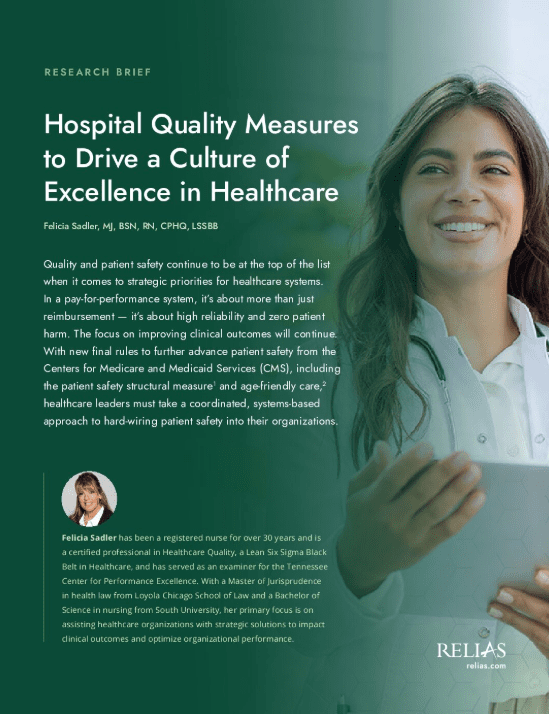
Hospital Quality Measures to Drive a Culture of Excellence in Healthcare
Quality and patient safety continue to be at the top of the list when it comes to strategic priorities for healthcare organizations. Download our research brief to review expert insights regarding hospital quality measures to improve clinical outcomes.
Download now →
