




In today’s hospice and home health environment, compliance is no longer just about passing surveys or avoiding denials. With increased oversight by the Centers for Medicare & Medicaid Services (CMS), enrollment scrutiny, Targeted Probe and Educate reviews, data-driven audits, and heightened attention on billing and utilization patterns, agencies are expected to demonstrate operational transparency, documentation accuracy, and ethical business practices at all times.
The challenge is that requirements continue to evolve, which can make compliance feel overwhelming. While every agency’s structure and risk profile are different, there are several practical areas organizations can prioritize to strengthen hospice and home health compliance without getting lost in unnecessary complexity.
Keep documentation consistent and organized
One of the most common issues identified during audits and site visits is inconsistent or incomplete documentation. Agencies should maintain organized records that accurately reflect operations, patient care, staffing, and billing activity. This focus is especially important because the CMS reports that insufficient documentation remains a leading cause of hospice payment errors and denials.
At a high level, this means:
• Keeping enrollment and licensing information current
• Ensuring clinical documentation supports the services billed
• Maintaining up-to-date employee credentials and training records
• Standardizing internal policies and procedures
Strong documentation practices help agencies respond more confidently when questions arise.
Regularly reviewing billing and utilization trends
Billing oversight is becoming increasingly data-driven. CMS and its contractors use analytics to identify unusual utilization patterns, rapid growth trends, and outlier billing behavior. For agencies focused on stronger hospice and home health compliance, routine monitoring of these patterns can help surface risks earlier and support more defensible billing practices.
Agencies do not need to overcomplicate this process, but they should periodically review:
• Visit frequency and utilization trends
• Diagnosis patterns
• Recertification activity
• Lengths of stay, including unusually long stays
• Referral source concentration and documentation that supports compliant referral practices
Routine internal reviews can help identify operational inconsistencies before they become larger compliance concerns.
Prepare for audits before they happen
Many agencies only begin preparing once an audit notice arrives. A stronger approach is to build a culture of ongoing audit readiness. That approach aligns with guidance from the U.S. Department of Health and Human Services Office of Inspector General, which emphasizes written standards, training, internal auditing, and corrective action as core elements of an effective compliance program.
This can include:
• Conducting mock chart reviews
• Training staff on survey and audit protocols
• Ensuring records are accessible and complete
Maintaining a centralized source of truth for policies, credentials, training records, and audit documentation
Preparing ahead of time reduces operational disruption, improves response times during reviews, and helps make hospice and home health compliance part of routine operations rather than a last-minute scramble.
Building a culture of compliance
Compliance is most effective when it is embedded in daily operations rather than treated as a reaction to enforcement activity.
Organizations that prioritize the following strategies are often better positioned to adapt to changing regulatory expectations:
• Staff education
• Communication
• Accountability
• Proactive oversight
A compliance-focused culture also helps employees feel more comfortable identifying issues early, which can significantly reduce organizational risk over time.
Looking ahead
As regulatory oversight continues to evolve, hospice and home health agencies are being asked to operate with greater consistency, transparency, and accountability. Although requirements will continue to change, organizations that stay proactive in documentation, billing oversight, audit preparedness, and staff education are generally better positioned to maintain strong hospice and home health compliance and respond confidently to industry expectations.
Creating sustainable compliance processes is not about reacting to enforcement trends. It is about building operational habits that support quality care, organizational integrity, and long-term stability.

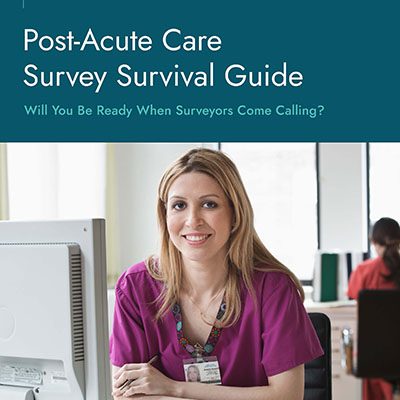
Post-Acute Care Survey Survival Guide: Will You Be Ready When Surveyors Come Calling?
Surveys of your healthcare operations are serious business, and they affect your bottom line in critical ways. The strategies in this survival guide will give you the tools to be prepared for a visit from state or federal officials coming to scrutinize your organization.
Download the Guide →
