






Juvenile correctional facilities house some of the most vulnerable youth in our society — many of whom live with disabilities, mental health conditions, or trauma histories. Yet, these systems often lack the inclusive practices needed to support equitable outcomes. Inclusivity in juvenile justice isn’t just a moral imperative — it’s a practical strategy to reduce recidivism, improve well-being, and promote successful re-entry.
Disabilities and the juvenile justice system
Research consistently shows that youth with disabilities and behavioral health needs are overrepresented in juvenile correctional facilities. Studies estimate that up to 70% of incarcerated youth have at least one diagnosable mental health condition, and between 30-60% qualify for special education services — figures significantly higher than those among their peers in general education settings. Many also have complex trauma histories, contributing to behavioral challenges that are often misinterpreted as defiance or delinquency.
This disproportionate representation is fueled by systemic issues such as inadequate school supports, biased disciplinary practices, and a lack of early intervention. Youth with disabilities are more likely to be suspended, expelled, or referred to law enforcement for behaviors that stem from unmet needs. Once in the juvenile justice system, they frequently encounter environments that are ill-equipped to accommodate their disabilities or provide appropriate behavioral health services.
Traditional correctional approaches — focused on compliance, control, and punishment — can exacerbate challenges for youth with disabilities, leading to higher rates of infractions, disciplinary isolation, and longer periods of confinement. Without individualized supports and trauma-informed care, these youth are less likely to benefit from rehabilitation programs and more likely to face poor long-term outcomes, including academic failure, unemployment, and recidivism.
Addressing this disparity requires a shift toward inclusive, evidence-based practices that recognize and respond to the unique needs of system-involved youth. That includes early identification, access to special education, integrated behavioral health services, and staff training on disability awareness and trauma-informed care. By promoting inclusive approaches, juvenile justice systems can begin to dismantle the pipeline that funnels vulnerable youth from marginalization into incarceration.
Key principles of inclusivity
Creating a truly inclusive juvenile justice system begins with reimagining how facilities support the complex needs of system-involved youth. Inclusive juvenile justice centers on equity, dignity, and rehabilitation — not just punishment. It recognizes that many youth in correctional settings live with disabilities, mental health challenges, trauma histories, and other unmet needs that require a coordinated, individualized response.
A foundational principle is the implementation of trauma-informed care, which prioritizes safety, trust, and emotional regulation. Many incarcerated youth have experienced significant trauma, and traditional punitive approaches often worsen their symptoms. Trauma-informed practices reduce re-traumatization, improve behavior, and build resilience.
Another core principle is individualized support. Youth with learning disabilities, intellectual or developmental disabilities (IDD), or behavioral health needs require tailored education plans, accessible programming, and accommodations under laws like the Individuals with Disabilities Education Act (IDEA). A one-size-fits-all approach fails these individuals and contributes to poor outcomes.
Restorative justice is also essential. This approach emphasizes accountability, healing, and relationship-building, allowing youth to understand the impact of their actions and repair harm in meaningful ways. It contrasts sharply with punitive models that rely on isolation and control, which often escalate behavioral issues rather than resolve them.
Additional key principles include access to high-quality education, integrated behavioral health services, and strong transition planning to support re-entry. Inclusive juvenile justice also requires cross-system collaboration — among schools, health providers, families, and justice agencies — to deliver holistic, wraparound support.
Barriers to inclusivity in the juvenile justice system
Despite growing awareness of the need for reform, several persistent barriers continue to limit progress toward an inclusive juvenile justice system. These challenges prevent youth — particularly those with disabilities, behavioral health needs, or trauma histories — from receiving equitable, rehabilitative care.
One of the most significant barriers is the punitive culture still prevalent in many correctional facilities. Traditional justice models prioritize control and compliance over rehabilitation, often using isolation or harsh discipline that disproportionately harms youth with disabilities and those affected by trauma. These practices are incompatible with trauma-informed care and can worsen behavioral challenges, undermining the goal of rehabilitation.
Another major challenge is the lack of appropriate screening and assessment tools. Many youth enter the system with undiagnosed learning disabilities, mental health conditions, or developmental disorders. Without early identification, these needs go unaddressed, leaving youth vulnerable to repeated infractions and extended confinement.
Additionally, implicit bias and systemic inequities often result in harsher treatment for youth of color, youth with disabilities, and LGBTQ+ youth — further compounding exclusion and poor outcomes.
How to create a more inclusive juvenile justice system
Frontline responders, law enforcement, juvenile probation officers, and public safety administrators are often the first to interact with youth in crisis. These encounters can either reinforce cycles of incarceration or serve as a gateway to support and redirection. As such, public safety organizations play a critical role in shaping a more inclusive juvenile justice system — one that prioritizes rehabilitation, equity, and long-term community well-being.
To support inclusion, public safety agencies must adopt trauma-informed practices that recognize how past adversity affects behavior. Training officers to de-escalate situations involving youth with mental health needs or disabilities is essential. Rather than relying on control or punishment, trauma-informed approaches foster safety, trust, and connection.
Restorative justice models are another powerful tool. By focusing on repairing harm, building accountability, and involving families and communities, these practices help youth take responsibility in constructive ways — often reducing recidivism more effectively than detention. Public safety leaders can help implement or expand these programs as alternatives to incarceration.
Cross-sector collaboration is key. Public safety organizations can partner with schools, behavioral health providers, disability advocates, and community-based services to ensure youth receive appropriate assessments, interventions, and support. This includes advocating for integrated behavioral health care, individualized education services, and re-entry planning that begins at intake.
By shifting their role from enforcers to community protectors and youth allies, public safety organizations can be powerful catalysts for inclusive juvenile justice — where all youth, regardless of ability or background, have the opportunity to heal, grow, and thrive.

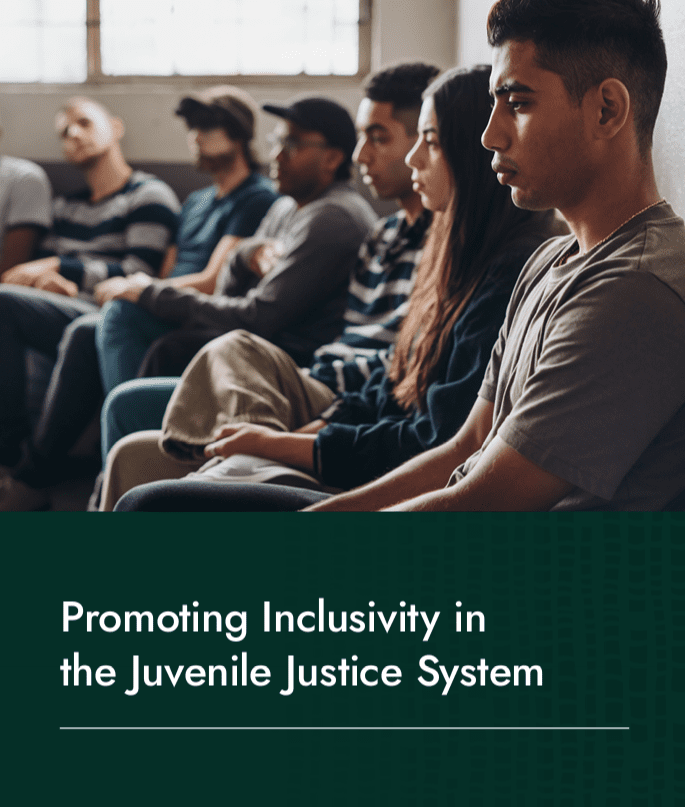
Checklist for Promoting Inclusivity in the Juvenile Justice System
As frontline responders, law enforcement, juvenile probation officers, and public safety administrators are often the first to interact with youth in crisis. These encounters can either reinforce cycles of incarceration or serve as a gateway to support and redirection.
Use this checklist to train your officers in trauma-informed practices, restorative justice models, and more.
Download checklist →
