



Healthcare onboarding best practices create a structured process for integrating new employees into a healthcare organization while ensuring compliance, clinical readiness, technology proficiency, cultural alignment, and long-term success. Effective onboarding helps healthcare organizations reduce turnover, improve employee engagement, accelerate productivity, and support better patient outcomes.
Unlike a single orientation session, modern onboarding is an ongoing process that begins before day one and extends through an employee’s first several months on the job.
Why healthcare onboarding matters
Healthcare organizations face workforce shortages, burnout, retention challenges, and increasing regulatory requirements. A strong onboarding program helps employees feel supported, prepared, and connected to the organization’s mission.
Research consistently shows that organizations with structured onboarding programs experience higher retention, stronger engagement, and faster time-to-productivity than organizations that treat onboarding as a paperwork exercise. According to Aberdeen Group research, organizations using pre-boarding are more likely to retain first-year employees and lower hiring costs.
Healthcare onboarding vs. pre-boarding
Pre-boarding refers to the period between offer acceptance and an employee’s first day. During this time, organizations can complete paperwork, introduce mentors, share expectations, and begin building engagement.
Healthcare onboarding includes pre-boarding but extends much further. It encompasses compliance training, credential verification, clinical education, technology training, mentorship, performance support, and retention initiatives. Training Industry identifies pre-boarding as a valuable opportunity to demonstrate employer investment before day one.
10 healthcare onboarding best practices
- Start before day one.
- Streamline credentialing and compliance.
- Personalize the onboarding experience.
- Assign mentors or preceptors.
- Reduce first-day anxiety.
- Provide role-specific learning pathways.
- Train employees on technology and EHR systems.
- Reinforce organizational culture.
- Implement 30-, 60-, and 90-day check-ins.
- Measure onboarding outcomes and retention.
Start before day one
The best onboarding programs begin before employees arrive. Sending welcome communications, sharing schedules, completing paperwork, and introducing key contacts helps reduce uncertainty and create excitement.
Pre-boarding can include benefits enrollment documents, direct deposit forms, employee handbooks, introductions to supervisors, and first-day logistics. Gallup onboarding research shows that early engagement can improve retention and accelerate productivity.
Streamline credentialing and compliance
Healthcare onboarding often involves license verification, certifications, background checks, HIPAA training, OSHA requirements, and policy acknowledgements.
Delays in credentialing can significantly impact productivity. Organizations should automate as much of the process as possible while ensuring compliance with regulatory standards. Organizations should ensure alignment with HIPAA guidance and OSHA healthcare standards.
Personalize the experience
Employees who feel valued early are more likely to remain engaged. Personalization can include mentor assignments, leadership welcome messages, team introductions, and individualized training plans.
For employees relocating to a new community, organizations can provide local resources and support that ease the transition. SHRM onboarding resources emphasize personalized onboarding, mentorship, and workplace connection.
Reduce first-day anxiety
The first day of work can be overwhelming. Healthcare organizations should provide clear instructions regarding arrival times, parking, dress codes, schedules, contacts, and expectations.
A simple welcome email sent a few days before the start date can dramatically improve the employee experience.
Technology and EHR training
Technology competency is essential in modern healthcare. New employees must learn electronic health record systems, communication tools, telehealth platforms, scheduling software, and cybersecurity procedures.
Training should be role-specific and reinforced throughout the onboarding process rather than compressed into a single session.
Nurse onboarding best practices
Nurses often face steep learning curves when joining new organizations. Effective nurse onboarding includes clinical competency assessments, unit-specific orientation, preceptor support, workflow training, patient safety education, and ongoing coaching.
Organizations that invest in structured nurse onboarding often see improvements in retention and job satisfaction.
Physician onboarding best practices
Physician onboarding extends beyond compliance and credentialing. It should include introductions to clinical leadership, organizational culture, referral networks, technology systems, and administrative workflows.
Successful physician onboarding helps accelerate productivity while supporting quality patient care.
Behavioral health and community healthcare onboarding
Behavioral health organizations face unique onboarding challenges. New employees must understand documentation requirements, crisis protocols, care coordination processes, regulatory standards, and community resources.
Mentorship and culture-building are especially important in behavioral and community healthcare environments.
How onboarding improves retention
Retention begins with onboarding. Employees who feel supported, informed, and connected are more likely to remain with an organization.
Strong onboarding programs reduce early turnover, improve engagement, increase confidence, and strengthen organizational commitment. Both Gallup and SHRM report stronger retention outcomes when organizations invest in structured onboarding.
Healthcare onboarding checklist
- Verify licenses and certifications
- Complete background checks
- Finalize benefits enrollment
- Complete HIPAA training
- Complete OSHA training
- Assign a mentor or preceptor
- Conduct EHR training
- Review organizational policies
- Establish 30-, 60-, and 90-day goals
- Schedule follow-up meetings
30-60-90 day onboarding framework
- First 30 Days: Focus on orientation, compliance, relationships, and foundational training.
- Days 31–60: Develop competency, build confidence, and expand responsibilities.
- Days 61–90: Increase independence, evaluate progress, and identify development opportunities.
Common healthcare onboarding mistakes
Common onboarding mistakes include information overload, poor communication, delayed credentialing, inadequate technology training, lack of mentorship, and ending onboarding after orientation.
Organizations should continuously gather feedback and refine onboarding processes.
Healthcare onboarding metrics
Organizations should track:
- First-year retention
- Time-to-productivity
- Employee engagement
- Training completion rates
- Employee satisfaction
- Manager satisfaction
These metrics help determine whether onboarding investments are producing meaningful results.
Key takeaways
Healthcare onboarding is far more than paperwork and orientation. Organizations that invest in structured onboarding programs improve employee engagement, accelerate productivity, strengthen retention, and support better patient outcomes.
By combining pre-boarding, mentorship, compliance training, technology education, and continuous development, healthcare organizations can create onboarding experiences that benefit employees, leaders, and the patients they serve. Research from Aberdeen Group, Gallup, and SHRM demonstrates the value of structured onboarding and pre-boarding programs.
Frequently Asked Questions about healthcare onboarding best practices
What is healthcare onboarding?
Healthcare onboarding is the process of integrating employees into a healthcare organization while ensuring compliance, readiness, and engagement.
How long should onboarding last?
Many organizations extend onboarding through the first 90 days or longer.
Why is onboarding important?
It improves retention, engagement, productivity, and patient outcomes.
What should be included in healthcare onboarding?
Compliance training, credentialing, technology training, mentorship, culture integration, and performance support.

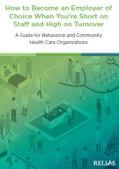
Free Guide: How to Become an Employer of Choice When You’re Short on Staff and High on Turnover
The staff shortage crisis and soaring turnover rates in the healthcare industry is creating a demand for employers to re-examine the way they attract, hire, onboard and develop staff. This guide—complete with worksheets and practical tools—includes four actionable steps behavioral and community health centers can take to improve current strategies and become an employer of choice.
Download the guide →
