

For Native American populations, targeted disease prevention and public health initiatives are critical to overcome the longstanding health disparities these communities have faced. To overcome past barriers to care, healthcare leaders within the Indian Health Service (IHS) and other federal agencies must address both medical and cultural needs through community-centered strategies. Only by addressing all these factors can we improve public health and disease prevention in Native American communities.
Understanding the unique needs of Native American healthcare
Native American and Alaska Native populations experience disproportionately high rates of chronic and infectious diseases, including diabetes, heart disease, and depression. Social determinants of health such as poverty, geographic isolation, food and housing insecurity, and limited access to healthcare services can make health challenges even more difficult.
In addition, historical trauma and systemic inequities continue to influence health behaviors and outcomes for Native communities. Addressing these challenges requires culturally respectful and community-driven approaches that prioritize tribal values, self-determination, and traditional healing practices.
Strengthening disease prevention in Native American communities
Strategies for disease prevention fall into three phases, or levels, depending on resource availability and the specific needs of the communities served.
Early and preventive care
Primary prevention strategies focus on reducing risk factors before illnesses develop. Strategies for Native communities include:
- Promoting immunizations throughout the lifespan
- Encouraging community wellness programs that incorporate traditional foods and physical activities
- Implementing culturally relevant health education on nutrition, physical activity, and substance misuse
- Supporting tobacco and vaping cessation programs tailored to Native youth
Routine care and health maintenance
Secondary prevention centers around identifying and treating early-stage conditions to prevent disease progression. It may be too late to prevent onset, but patients can still benefit greatly from timely interventions. Tactics include:
- Providing routine screenings for diabetes, hypertension, cancer, and mental health
- Conducting outreach through schools, community events, and tribal clinics
- Leveraging community health representatives to increase access to screening and education
Disease management and support
The third and most basic level of preventive care helps individuals manage existing health conditions and prevent complications. Some strategies are:
- Providing chronic disease self-management education and support
- Expanding access to telehealth and remote patient monitoring in rural areas
- Improving care coordination between IHS, tribal health programs, and urban Indian health organizations
Culturally centered strategies for disease prevention in Native American communities
Public health efforts in Native communities have shown to be most effective when rooted in cultural traditions and led by community members because integrating traditional healing with Western medicine increases engagement and trust, major factors for improving outcomes.
Building a bridge between Western and tribal medicine is an important step to removing barriers to care for Native American populations, and one successful method has been through community health representatives.
Leveraging community health representatives
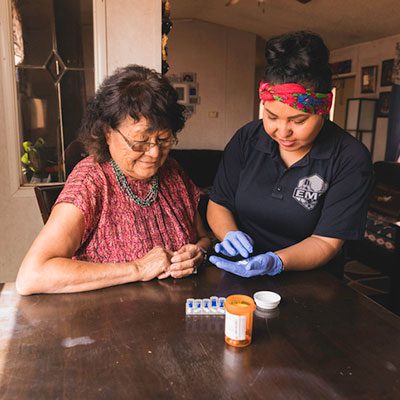
Community health representatives (CHRs) are frontline public health workers who serve in Native communities and healthcare systems. These individuals serve as trusted liaisons who help bridge the gap between clinical care and community-based support.
The CHR Program, established in 1968, is the only federally funded, tribally integrated health program exclusively for American Indian and Alaska Native communities. CHRs are typically members of the communities they serve and are uniquely positioned to provide culturally relevant health education, outreach, and support through the following services:
- Providing health education on topics like chronic disease, nutrition, maternal health, and prevention
- Helping with care coordination and follow-up care
- Conducting home visits to support individuals with limited access to clinics or transportation
- Offering translation and interpretation services in Native languages, if needed
- Promoting immunization, screenings, and medication adherence
- Serving as trusted liaisons between healthcare providers and patients
CHRs bring cultural knowledge, trust, and language skills that clinical staff may not have. They also have a deeper understanding of social determinants of health that affect Native American communities. With their specialized knowledge, they can contribute to better outcomes in chronic disease management and public health outreach. Many tribal health systems view CHRs as vital to tribal healthcare.
More articles in this series
Native American Healthcare Disparities: Challenges and Solutions →
Native Americans and Opioid Addiction: Understanding the Problem →
Dementia in Native Americans: Stages and Care Needs →
IHS Health IT Modernization Program: The Case for a Better Learning Management Platform →
Building data and reporting capabilities
Effective disease prevention in Native American communities requires accurate, timely, and culturally relevant data. Tribal data sovereignty, where tribes collect, manage, and interpret their own health data, provides ownership and decision-making power to those who have the greatest interest in the outcomes.
To help strengthen tribal data sovereignty, healthcare leaders can:
- Advocate for disaggregated data to reveal Native American health disparities that may be hidden within broader categories
- Use data to inform targeted interventions and allocate community resources
- Support the work of tribal epidemiology centers for the study of diseases
Establishing cross-sector collaboration and leadership
Sustainable public health solutions also depend on collaboration. Leaders should foster partnerships among IHS, tribal governments, federal agencies, nonprofits, and community organizations. Priorities include:
- Promoting culturally grounded, community-led programs through grant funding and technical assistance
- Supporting workforce development initiatives that train and retain Native public health professionals
- Encouraging integrated care models that combine medical, behavioral, and social services
Healthcare leaders can also support tribal public health by working to empower tribes to design and implement public health strategies that reflect their priorities and cultural values.
Case studies: Prevention in action
Success stories from Native communities demonstrate the power of culturally tailored public health initiatives. Here are some examples:
- A tribal diabetes prevention program blended nutrition education with traditional food preparation and storytelling. The Tohono O’odham Community in Action (TOCA) program in Arizona used traditional practices and events to teach younger generations about healthy foods and behaviors to prevent diabetes.
- A youth-led mental health initiative promoted resilience through cultural identity and peer support. The Warm Springs community in Oregon created a suicide prevention helpline designed and staffed by Native youth to provide peer-to-peer 24/7 support.
- Mobile vaccination clinics increased COVID-19 vaccine access in rural areas of Montana through CHR outreach. The program helped overcome transportation and financial barriers, achieving a vaccine rate over 95% among eligible adults.
A call to action for healthcare leaders
Healthcare leaders play a critical role in advancing disease prevention in Native American communities and improving public health. By promoting culturally respectful care, focusing locally, and supporting tribal sovereignty, leaders can help build a future where Native Americans experience equitable health outcomes everywhere.
Healthy communities start with respect for those they serve, aligning with existing needs and structures — but also seeking innovative approaches that elevate and transform care where possible.

Training Solutions for Federal Government Healthcare
Relias can help your government organization improve patient care and outcomes with our proven, data-driven solutions. We support your clinicians on their journey to competency with specialized knowledge for your populations.
Explore solutions →
