






In today’s fast-evolving healthcare landscape, delivering a seamless and personalized patient experience is more critical than ever. Patients expect more than just quality care — they want interactions that are timely, meaningful, and responsive to their unique needs. Enter artificial intelligence (AI), a transformative force that’s reshaping how healthcare providers engage with patients. By automating workflows, analyzing complex data, and personalizing outreach, AI is helping organizations enhance care delivery and build stronger patient relationships. In this article, we explore how innovative healthcare leaders are leveraging AI to elevate the patient experience.
How AI is improving patient experience in healthcare
Imagine a healthcare system where every patient interaction is seamless, personalized, and proactive. Artificial intelligence is making this vision a reality by automating processes, tailoring treatments, and providing actionable insights. AI in patient engagement is not just a buzzword; it’s a powerful tool that helps healthcare providers offer more efficient and effective care. Here’s a closer look at how forward-thinking organizations are using AI in patient experience.
Top four use cases of AI in patient experience
1. Predictive analytics
Predictive analytics is a powerful AI application that can significantly improve patient care. By analyzing vast amounts of data, predictive models can forecast patient outcomes, identify potential health risks, and suggest proactive interventions. For example, AI can predict which patients are at risk of readmission, allowing healthcare providers to take preventive measures and improve patient outcomes.
2. Question/survey development
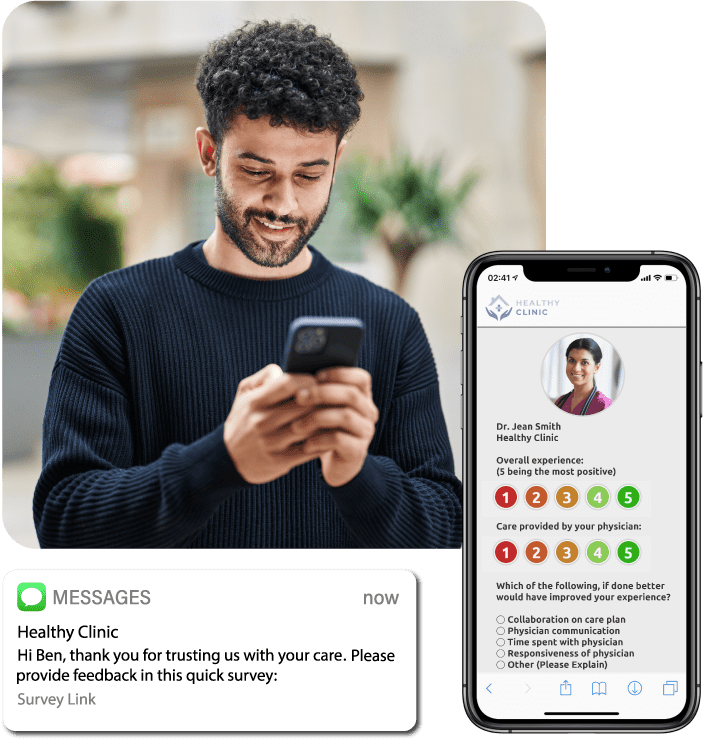
Developing effective questions and surveys is crucial for capturing meaningful patient feedback. AI can assist in creating more precise and relevant surveys by analyzing previous responses and identifying patterns. This ensures that surveys are not only comprehensive but also engaging for patients.
3. Personalized outreach
Personalized communication is key to improving patient engagement. AI enables healthcare providers to deliver tailored messages to patients based on their preferences, behaviors, and medical history. For instance, AI can identify patients who may benefit from specific health programs or reminders about upcoming appointments, ensuring timely and relevant communication.
4. Service recovery
Service recovery is an essential aspect of maintaining patient satisfaction. When things go wrong, addressing issues promptly and effectively can turn a negative experience into a positive one. AI can play a significant role in service recovery by quickly identifying dissatisfied patients through sentiment analysis of feedback and flagging their concerns for immediate action.
Integrating AI into patient experience management
AI is undeniably transforming the healthcare sector, offering innovative solutions to enhance patient experience. From predictive analytics to personalized outreach, AI applications are making healthcare more efficient, effective, and patient-centered.
By integrating AI into their operations, healthcare organizations can gain deeper insights into patient needs, deliver personalized communication, and ensure timely service recovery. As AI continues to evolve, its potential to reshape patient experience will only grow, promising a future where healthcare is more responsive, personalized, and satisfying for patients.

Improve patient experience and drive quality outcomes
Optimize care improvement through real-time data insights, patient feedback, and prescriptive interventions to identify and close gaps in care delivery and patient experience.
Learn more →
