






Title V of the Social Security Act provides funding to improve the health and well-being of U.S. mothers, children, and families. Established in 1935, Title V is the oldest federal-state partnership program, providing block grants to states and territories to support maternal and child health (MCH) services such as perinatal care, immunizations, and newborn screening. Used strategically, Title V funds can provide critical support for a range of maternal and children’s health needs and help reduce maternal mortality and morbidity.
Title V’s flexible funding allows states and territories to tailor their programs to meet the specific priorities of their MCH populations. Grantees conduct comprehensive needs assessments, develop a plan to address the needs, and report on their progress and outcomes using a set of national and state-specific performance measures. Currently, Title V is helping to fill identified MCH gaps for 59 states and jurisdictions nationwide.
Title V and maternal mortality: A need for funding
Maternal mortality, defined as the death of a woman during pregnancy or within one year after the end of a pregnancy, remains a serious public health and healthcare delivery challenge in the U.S.
Recent national data shows that the U.S. maternal mortality rate was 17.9 deaths per 100,000 live births in 2024, with persistent disparities across populations.
Black women continue to experience significantly higher maternal mortality rates than other groups, highlighting ongoing inequities in access, quality, and outcomes across the care continuum.
Many leading causes of maternal death, including hemorrhage, hypertension, infection, cardiovascular disease, and behavioral health conditions, are influenced by gaps in care coordination, clinical variation, and social determinants of health.
Title V funding plays a vital role in addressing maternal mortality by supporting statewide infrastructure, data systems, and quality improvement initiatives. Common uses of Title V funds include:
- Establishing or enhancing maternal mortality review committees (MMRCs) to analyze maternal deaths and identify prevention strategies
- Implementing evidence-based practices and quality improvement initiatives to improve care delivery
- Expanding access to care coordination, home visiting, and case management programs
- Promoting maternal mental health and substance use screening and treatment
- Increasing awareness of pregnancy-related complications and early warning signs
- Engaging community partners to address social and environmental drivers of maternal health
What this means for hospitals and health systems
For acute care organizations, Title V initiatives directly intersect with hospital operations and performance:
- Quality alignment: Many Title V initiatives mirror hospital-based safety bundles and maternal quality improvement programs
- Data expectations: Participation in MMRCs and reporting systems is increasingly expected
- Partnership opportunities: Hospitals can collaborate with state Title V programs to expand services and funding pathways
- Risk exposure: Poor maternal outcomes affect publicly reported metrics, accreditation, and reimbursement models
Where Title V is succeeding
California’s Title V program, the largest in the nation, has achieved measurable success through coordinated statewide initiatives.
In 2006, California established the California Maternal Quality Care Collaborative (CMQCC), a public-private partnership bringing together healthcare providers, hospitals, health plans, and public health agencies to improve maternal outcomes.
With support from Title V and other funding sources, CMQCC implemented several initiatives, including:
- A statewide maternal data platform for benchmarking and performance improvement
- A maternal mortality review committee to identify preventable causes of death
- Evidence-based clinical toolkits for managing complications such as hemorrhage and preeclampsia
- Programs focused on reducing racial and ethnic disparities in maternal care
As a result, California reduced its maternal mortality rate by approximately 65% over a decade, demonstrating the impact of coordinated, data-driven strategies.
Key takeaways for hospital leaders
- Standardization reduces variation: Evidence-based protocols improve outcomes
- Data transparency drives improvement: Benchmarking enables accountability
- Cross-sector collaboration is essential: Public-private partnerships accelerate impact
- Equity must be addressed directly: Disparities persist without targeted interventions
Title V and maternal mortality: Policy and operational implications
While Title V is a critical source of funding, it cannot independently solve maternal mortality. Broader policy, funding, and system-level changes are required.
Key policy recommendations to strengthen the impact of Title V include:
- Increasing and sustaining federal and state funding to support maternal health initiatives
- Expanding Medicaid coverage and continuity of care before, during, and after pregnancy
- Strengthening data collection and reporting systems to improve maternal health surveillance
- Addressing social determinants of health and health equity gaps
- Investing in healthcare workforce training and clinical competency development
Operational implications for healthcare organizations
Hospital leaders should translate these policy priorities into action by:
- Aligning maternal health strategies with state Title V priorities and funding opportunities
- Preparing for expanded data reporting and quality measurement requirements
- Integrating equity-focused care models into maternal health services
- Strengthening partnerships with community organizations and public health agencies
How healthcare education can improve maternal outcomes
Healthcare education is a critical lever for reducing maternal mortality and improving maternal health outcomes.
Title V programs emphasize workforce development as a core strategy to improve care delivery and reduce variation across healthcare settings.
Strengthening training on evidence-based maternal care practices enables healthcare professionals to deliver safer, more effective care for pregnant and postpartum patients.
Maternal mortality in the U.S. is often linked to gaps in access, coordination, and clinical consistency. Targeted education can:
- Improve adherence to evidence-based clinical protocols
- Reduce variation in maternal care delivery
- Support early identification and response to complications
- Enhance care coordination across the continuum
For hospital executives, investing in workforce education is not just a clinical priority. It is a strategic imperative that supports quality performance, reduces risk, and aligns with Title V maternal mortality goals.
Final takeaway for healthcare leaders
Title V and maternal mortality are deeply interconnected, but the impact of Title V depends on execution at the healthcare system level.
Hospitals that proactively align with Title V priorities, invest in workforce education, and implement data-driven maternal health strategies will be best positioned to improve outcomes, reduce disparities, and lead in a rapidly evolving maternal health landscape.

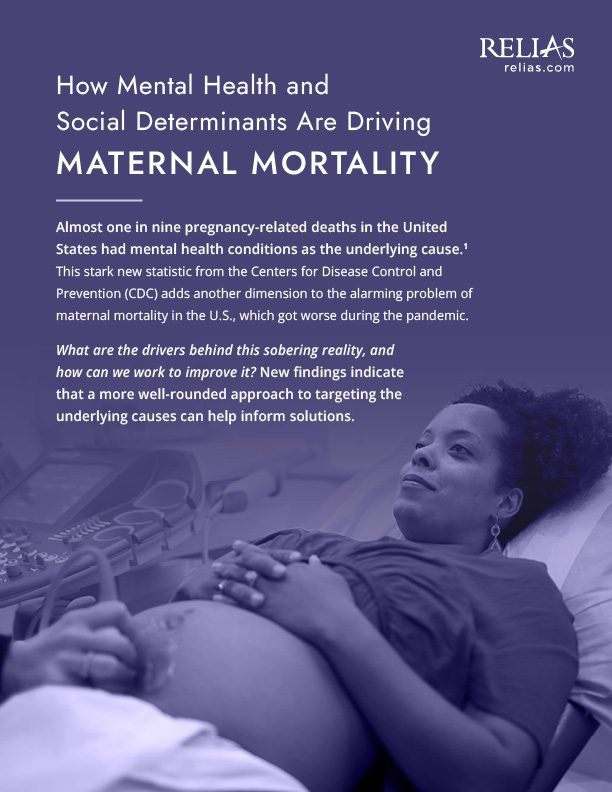
How Mental Health and Social Determinants Are Driving Maternal Mortality
Read our research on maternal mental health, strategies for improving maternal mortality, and actions to combat the maternal mortality crisis.
Download now →
