






The Centers for Medicare & Medicaid Services (CMS) created the Birthing-Friendly hospital designation to recognize hospitals and health systems that participate in maternal quality improvement initiatives and implement evidence-based practices designed to improve maternal health outcomes. The designation is the first-ever CMS hospital quality designation focused specifically on maternity care and maternal safety.
For acute healthcare executives and decision-makers, the Birthing-Friendly hospital designation is more than a public-facing recognition. It signals organizational commitment to maternal health quality, health equity, patient safety, and participation in perinatal quality improvement collaboratives. It also increasingly reflects how CMS expects hospitals to approach maternal morbidity reduction, quality reporting, and interdisciplinary care coordination.
Maternal mortality remains a significant challenge in the United States. CMS and other federal agencies continue to prioritize initiatives aimed at reducing preventable maternal morbidity and mortality while improving outcomes for underserved populations. In response, hospitals are facing growing pressure to strengthen maternal safety programs, improve data reporting, and implement evidence-based maternity care practices.
What is the Birthing-Friendly hospital designation?
The Birthing-Friendly hospital designation is part of CMS’ Maternity Care Action Plan and Hospital Inpatient Quality Reporting (IQR) Program. Hospitals can attain the designation by attesting that they:
- Participate in a statewide or national perinatal quality improvement collaborative
- Implement evidence-based interventions and patient safety practices designed to improve maternal health outcomes
CMS publicly reports Birthing-Friendly hospitals and health systems through the Care Compare platform, allowing patients, payers, employers, and community stakeholders to identify organizations participating in maternal quality improvement initiatives.
For healthcare executives, this designation represents an important operational and strategic signal. Participation demonstrates engagement in quality improvement infrastructure tied to maternal safety, equity, and accountability.
Why the Birthing-Friendly hospital designation matters for healthcare organizations
The designation has implications far beyond public recognition. Hospitals increasingly operate in an environment where quality transparency, maternal outcomes, and equity performance influence reimbursement strategy, organizational reputation, and patient trust.
A Birthing-Friendly hospital designation can support:
- Maternal safety and quality improvement initiatives
- Public reporting and transparency efforts
- Health equity strategy alignment
- Value-based care readiness
- Community trust and brand reputation
- Recruitment and retention of maternity care staff
- Alignment with CMS maternal health priorities
CMS has stated that the designation is intended to identify hospitals implementing best practices to advance healthcare quality and safety for pregnant and postpartum patients.
Additionally, the designation aligns with broader CMS maternal health transformation efforts, including the Transforming Maternal Health (TMaH) Model and expanded maternal quality reporting initiatives in Medicaid and acute care settings.
Maternal mortality is closely linked to healthcare disparities
Higher maternal mortality and morbidity rates continue to disproportionately affect underserved communities. Variation in care access, clinical resources, workforce availability, and social supports contributes to inequities in maternal outcomes across healthcare systems.
For hospital leaders, this reality creates operational and strategic challenges that extend beyond labor and delivery units alone. Maternal health performance increasingly intersects with:
- Population health management
- Health equity reporting
- Community partnership development
- Care coordination strategy
- Workforce planning
- Quality governance
CMS’ maternal health initiatives are designed in part to address these disparities by encouraging hospitals to standardize evidence-based care practices and participate in collaborative improvement models.
Social determinants of health and maternal outcomes
Social determinants of health continue to play a significant role in maternal morbidity and mortality. Factors such as housing instability, transportation barriers, food insecurity, education access, and socioeconomic conditions can affect both prenatal and postpartum outcomes.
For acute care organizations, addressing these factors increasingly requires coordinated enterprise-wide strategies that involve:
- Case management
- Care transition planning
- Community partnerships
- Medicaid coordination
- Screening and referral workflows
- Data integration initiatives
CMS has expanded efforts to encourage hospitals and state Medicaid agencies to identify and address health-related social needs as part of broader maternal health improvement strategies.
Hospitals pursuing or maintaining Birthing-Friendly designation status may need to strengthen interdisciplinary coordination and establish more robust pathways connecting patients with community-based services and social supports.
Maternal mental health remains a critical operational challenge
Maternal mental health is another significant factor influencing maternal outcomes. Peripartum depression and other behavioral health conditions often go undetected or undertreated during pregnancy and the postpartum period.
Healthcare organizations seeking to improve maternal outcomes should evaluate whether their maternal care strategies include:
- Standardized screening protocols
- Behavioral health integration
- Evidence-based referral pathways
- Follow-up and continuity-of-care processes
- Interdisciplinary communication workflows
- Staff education and competency development
Collaborative care models that integrate behavioral health clinicians into maternity care teams can improve coordination and reduce gaps in care. Additionally, healthcare organizations should consider whether behavioral health documentation, discharge planning, and risk assessments are appropriately integrated into the electronic medical record.
For executives, maternal mental health initiatives increasingly represent both a patient safety priority and a workforce competency issue.
How hospitals qualify for the Birthing-Friendly designation
Hospitals and health systems receive the designation by reporting progress on CMS’ Maternal Morbidity Structural Measure through the Hospital Inpatient Quality Reporting Program.
To qualify, hospitals must attest that they:
- Participate in a statewide or national perinatal quality improvement collaborative
- Implement evidence-based patient safety practices or maternal safety bundles
CMS initially tied the designation to participation in these collaborative quality improvement structures because they help organizations standardize care practices and reduce variation in maternal care delivery.
Examples of qualifying initiatives may include participation in:
- Alliance for Innovation on Maternal Health (AIM) safety bundles
- State perinatal quality collaboratives
- Maternal morbidity reduction programs
- Evidence-based obstetric safety initiatives
Healthcare leaders should recognize that participation alone may not be sufficient to drive measurable maternal outcome improvements. Recent research suggests that while Birthing-Friendly hospitals are more likely to implement quality improvement infrastructure, the designation does not necessarily correlate with superior maternal quality outcomes across all metrics.
As a result, organizations should view the designation as one component of a broader maternal health strategy rather than a standalone quality endpoint.
What is included in the CMS Maternity Care Action Plan?
The CMS Maternity Care Action Plan includes initiatives spanning five major areas:
- Coverage and access to care
- Data collection and reporting
- Quality of care
- Workforce development
- Social supports
For acute care executives, the action plan signals CMS’ increasing emphasis on maternal health accountability, quality measurement, and equity-focused care delivery.
Coverage and access to care
CMS initiatives aim to improve access to maternity services through Medicaid expansion efforts, postpartum coverage extensions, emergency care protections, and improved continuity of care.
Hospitals operating in underserved or rural markets may face additional challenges related to workforce shortages, service line sustainability, and access disparities. Consequently, executive leaders may need to evaluate long-term maternity service line strategies alongside community health needs assessments and payer relationships.
Data collection and maternal health reporting
Data collection and reporting remain central components of CMS maternal health strategy.
CMS has expanded maternal health quality reporting requirements through electronic clinical quality measures and structural reporting programs focused on severe obstetric complications, cesarean delivery rates, and maternal morbidity reduction.
For hospitals, this creates growing operational demands related to:
- Clinical documentation integrity
- EMR interoperability
- Quality analytics
- Equity reporting
- Governance oversight
- Performance benchmarking
Healthcare organizations that build strong maternal data infrastructure may be better positioned to adapt to future regulatory and reimbursement changes.
Quality of care initiatives
The Birthing-Friendly hospital designation is one of several CMS initiatives designed to strengthen maternal care quality.
Additional efforts include:
- Expansion of maternal safety bundles
- Reduction of low-risk cesarean births
- Hospital quality improvement collaboratives
- Enhanced maternal morbidity monitoring
- Equity-focused care initiatives
CMS and partner organizations continue encouraging hospitals to adopt standardized evidence-based obstetric practices that reduce variation in care and improve patient safety outcomes.
Workforce and social support initiatives
The Maternity Care Action Plan also emphasizes workforce development and community-based maternal care supports.
CMS has identified doulas, community health workers, midwives, and care coordination programs as important components of maternal health infrastructure.
Healthcare organizations may need to evaluate whether existing workforce models sufficiently support:
- High-risk maternal populations
- Behavioral health integration
- Care transitions
- Community partnerships
- Equity-focused outreach efforts
For many hospitals, strengthening maternal health programs will require interdisciplinary collaboration across clinical, operational, and community health teams.
Operational challenges hospitals face in becoming Birthing-Friendly
Although the Birthing-Friendly hospital designation provides a structured framework for maternal quality improvement, implementation can create operational complexity.
Common challenges include:
- Limited staffing resources
- Variation in obstetric practices
- Inconsistent documentation workflows
- Data collection burdens
- Workforce training gaps
- Behavioral health integration challenges
- Cross-department coordination issues
- Rural access limitations
Healthcare leaders should approach maternal quality initiatives as enterprise-wide operational priorities rather than isolated clinical projects.
Organizations that successfully implement maternal safety initiatives often establish strong governance structures, interdisciplinary accountability, and continuous staff education programs.
Why workforce education must remain part of the solution
Improving maternal outcomes requires more than policy changes alone. Healthcare organizations must ensure clinicians, leaders, and interdisciplinary care teams have access to evidence-based education and competency development.
Research continues to support the role of assessment-driven obstetrical education, simulation-based training, and standardized maternal safety protocols in improving patient outcomes.
Healthcare leaders should evaluate whether their organizations provide sufficient education related to:
- Maternal early warning signs
- Obstetric emergencies
- Behavioral health integration
- Health equity and implicit bias
- Team communication
- Patient safety bundles
- Discharge planning and care transitions
As CMS maternal health initiatives continue evolving, organizations that invest in workforce readiness, interdisciplinary collaboration, and continuous maternal safety improvement may be better positioned to improve outcomes and sustain long-term operational performance.

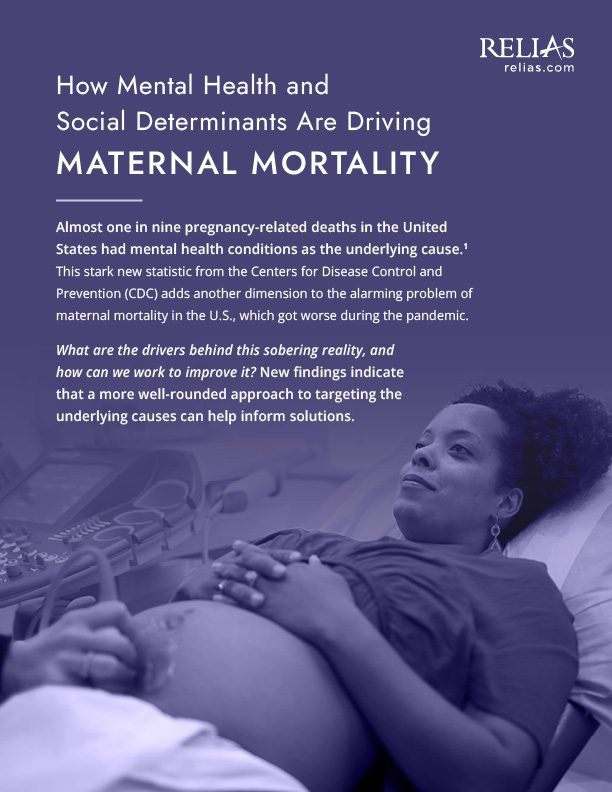
How Mental Health and Social Determinants Are Driving Maternal Mortality
Read our research on maternal mental health, strategies for improving maternal mortality, and actions to combat the maternal mortality crisis.
Download now →
