






Despite the number of individuals affected by mental illness and mental health disorders, the stigma around mental health remains a significant challenge across the healthcare industry. Mental health stigma in healthcare refers to the negative attitudes, structural barriers, and cultural pressures that discourage healthcare professionals from discussing or seeking support for mental health conditions.
For acute care hospitals and healthcare organizations, this issue is no longer simply a workforce wellness concern. Mental health stigma in healthcare directly affects staff retention, workforce resilience, patient safety, operational performance, and long-term organizational sustainability.
In 2024, the World Health Organization reinforced that healthcare worker mental health and well-being are essential to sustaining healthcare systems globally and highlighted continued concerns around burnout, suicide prevention, and barriers to seeking care.
To suggest that healthcare workers are exempt from experiencing mental illness and mental health disorders would be nothing short of illogical, yet the mental health stigma is often magnified in healthcare environments. Healthcare workers face a unique level of stigma amidst the intense professional pressure to excel in the workplace, maintain composure during crisis situations, and prioritize patient care over their own well-being.
Mental health data have consistently shown physicians to have elevated suicide risk compared to many professions, while nurses and frontline clinicians continue to experience unprecedented levels of burnout, compassion fatigue, and moral injury. The complicated reality is that the stressors placed on healthcare workers are also the very barriers that can deter them from seeking treatment, creating a Catch-22 for those seeking help.
What drives mental health stigma in healthcare?
Healthcare organizations are increasingly recognizing that mental health stigma in healthcare is driven not only by individual attitudes, but also by organizational culture, credentialing processes, workforce shortages, and operational pressures.
Common drivers include:
- Fear of judgment or professional consequences. Many clinicians remain concerned that disclosing mental health treatment could negatively affect licensing, credentialing, promotion opportunities, or peer perception. The Joint Commission has continued advocating for removing barriers that discourage healthcare professionals from seeking mental health support.
- Unrealistically high professional standards. Clinical roles often attract high-achieving individuals who are less likely to admit vulnerability or ask for help, particularly in environments where resilience is viewed as an expectation rather than a support need.
- A culture of self-sacrifice. Healthcare workers commonly enter the profession with a calling to serve others and may feel guilty prioritizing their own mental health needs.
- Staffing shortages and operational strain. Ongoing workforce shortages across healthcare systems continue to intensify stress, increase workloads, and reduce opportunities for recovery and psychological support.
- Workplace violence and traumatic exposure. Acute care staff are increasingly exposed to violence, trauma, and emotionally demanding clinical situations that contribute to anxiety, depression, and post-traumatic stress symptoms.
The lasting effect of the pandemic on healthcare workers
The COVID-19 pandemic accelerated existing challenges related to mental health stigma in healthcare and exposed long-standing weaknesses in workforce support systems.
Studies of healthcare workers responding to the pandemic identified significant increases in anxiety, depression, insomnia, burnout, fear of workplace violence, and traumatic stress symptoms. While the immediate crisis phase has passed, healthcare organizations continue to experience the operational consequences of prolonged workforce strain.
Today, many acute care leaders are navigating:
- Increased turnover and vacancy rates
- Workforce disengagement
- Rising absenteeism and presenteeism
- Ongoing burnout among nurses and physicians
- Greater demand for behavioral health support services
Healthcare executives are also recognizing the connection between workforce mental health and broader organizational outcomes, including patient safety, quality performance, staffing stability, and financial sustainability.
Research published in recent years has emphasized that stigma remains one of the most significant barriers preventing clinicians from accessing care. A 2024 physician-focused toolkit reported that nearly eight in ten physicians believe stigma around mental health treatment remains prevalent within medicine.
At the same time, healthcare systems are increasingly exploring digital mental health interventions, peer support programs, and leadership-driven culture initiatives designed to reduce stigma and improve access to care.
Joint Commission’s position on mental health stigma in healthcare
In response to growing concerns around clinician well-being, workforce shortages, and burnout, The Joint Commission has continued emphasizing the importance of addressing mental health stigma in healthcare organizations.
The Joint Commission has affirmed its support for eliminating barriers that inhibit clinicians and healthcare staff from accessing mental health services, including policies that reinforce stigma or fear related to professional consequences.
Importantly, The Joint Commission supports recommendations from organizations such as the American Medical Association and the Federation of State Medical Boards to limit licensing and credentialing inquiries to conditions that currently impair professional performance rather than requiring disclosure of past mental health treatment.
This guidance has important implications for healthcare executives and decision-makers. Increasingly, workforce mental health is being viewed as an organizational quality, safety, and workforce sustainability issue — not simply an employee assistance concern.
Recent Joint Commission research also found growing organizational emphasis on clinician well-being assessments and interventions across accredited hospitals and healthcare systems.
What healthcare leaders can do to reduce mental health stigma
Reducing mental health stigma in healthcare requires more than awareness campaigns. Sustainable change requires organizational leadership, operational alignment, and long-term cultural transformation.
Healthcare leaders can take several immediate steps to reduce stigma and strengthen workforce well-being:
1. Normalize mental health conversations
Executives, clinical leaders, and managers should openly acknowledge the realities of stress, burnout, and emotional strain in healthcare environments. Leadership transparency helps reduce fear and normalize help-seeking behavior.
2. Reevaluate credentialing and reporting policies
Organizations should review credentialing, privileging, and HR policies that may unintentionally discourage clinicians from seeking care.
3. Expand access to confidential mental health resources
Healthcare workers are more likely to seek support when services are:
- Confidential
- Easily accessible
- Flexible
- Integrated into the workplace experience
4. Invest in peer support and leadership training
Peer support initiatives and manager training programs can help organizations identify workforce distress earlier and foster psychologically safer work environments.
5. Measure workforce well-being
Forward-thinking healthcare organizations are increasingly treating workforce well-being as an operational metric tied to retention, engagement, quality outcomes, and patient experience.
Why change can’t wait
Mental health stigma is a strategic healthcare delivery issue.
Organizations that fail to address stigma risk:
- Increased turnover and recruitment costs
- Higher rates of burnout and absenteeism
- Reduced workforce engagement
- Greater patient safety risks
- Lower workforce resilience during crises
At the same time, organizations that proactively address mental health stigma can strengthen workforce stability, improve clinician engagement, support patient care quality, and reinforce organizational culture. While the healthcare landscape continues to evolve, one reality remains clear: Healthcare workers cannot sustainably care for others in environments where seeking mental health support is perceived as weakness. Reducing mental health stigma in healthcare requires healthcare organizations to move beyond awareness and toward operational action, leadership accountability, and long-term cultural change.

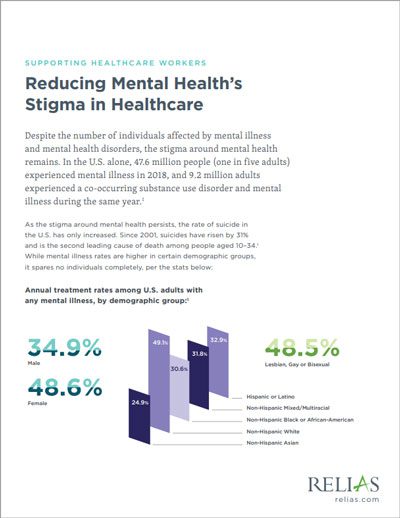
Reducing Mental Health’s Stigma in Healthcare
Despite the number of individuals affected by mental illness and mental health disorders, the stigma around mental health remains. Download this white paper to learn how to reduce the stigma, through education, transparency, compassion, and advocacy.
DOWNLOAD THE WHITE PAPER →
