

Compliance gaps are tricky. On paper, everything looks perfect. Training completion rates are 100%. Policies are up to date. Incident reports are filed and stored in compliance systems. Yet patients are still falling, experiencing medication errors, or suffering preventable harm.
As a healthcare leader, you face a critical question:
Are your staff members compliant in ways that protect patients, or just enough to pass a survey?
Why compliance isn’t always what it seems
Regulatory compliance is often measured by documentation, such as completed training, updated policies, and logged incidents. These are essential, but they can also create a false sense of security.
1. Training doesn’t always mean competency
Completing a training module doesn’t guarantee that staff can apply that knowledge in real-time. According to Dale’s Cone of Experience, people remember 10% of what they read, 20% of what they hear, 50% of what they hear and see, but 90% of what they do. This gap between training and actual competency is where preventable harm can emerge. Without validation of skills, preventable harm becomes more likely. For example, a nurse may complete a pressure injury prevention course but still miss early warning signs during a shift.
2. Policy management pitfalls
Even the best policies are useless if staff can’t access them when needed. Searching through outdated binders or intranet folders wastes precious time and leads to inconsistent care.
Modern compliance platforms integrate policies into care workflows, ensuring caregivers always have the latest guidance.
3. Data without direction
Incident tracking is widespread, but the data becomes passive unless trends are analyzed and acted upon. A logged fall that doesn’t trigger a response is a missed opportunity to prevent the next one.
According to a Corewell Health study, predictive analytics reduces hospital readmission. The study found that 200 patients were kept from being readmitted, saving the health system about $5 million.
How compliance gaps harm patients
Compliance gaps can have serious real-world consequences for patients and staff alike if left unaddressed. These invisible gaps show up in care as:
Missed policies
Care becomes inconsistent when staff can’t access the right policy or procedure quickly. This can result in medication errors, delayed interventions, or survey citations for noncompliance.
Surface-level training
Staff may technically be trained, but without assessment or validation of skills, they might not recognize early warning signs, apply new workflows correctly, or escalate concerns appropriately, leading to preventable harm. This can lead to an inability to escalate concerns or apply new workflows.
Unanalyzed incidents
If falls, infections, or medication variances are logged but not examined systemically, organizations may miss critical opportunities to adapt and prevent recurrence. The result? Repeatable harm that erodes trust and quality.

Building a more innovative, safer compliance system
Closing the compliance gaps means acting proactively. It demands visibility, accessibility, and actionability across people, processes, and platforms.
1. Real-time insight into competency
Go beyond tracking completions. Validate whether staff can demonstrate skills in real-world scenarios. For example, are CNAs confident in infection control? Can nurses apply fall prevention protocols?
2. On-demand access at the point of care
Staff shouldn’t have to leave a patient’s side to search for a policy in a binder or outdated intranet. Modern compliance systems integrate policies into care workflows, ensuring caregivers always have the latest guidance.
3. Connected tools for continuous improvement
Data becomes actionable when training, policy, and incident systems are integrated. A fall spike can trigger a microlearning refresh, a policy update, or a team huddle, without waiting for the following quarterly review.
This shift from passive to active compliance enables your healthcare team to anticipate risk, standardize excellence, and keep patients safer.
Final thoughts on closing compliance gaps
In summary, compliance isn’t about checking boxes but protecting people. By aligning learning, performance, and quality tools, your organization can reduce harm, improve staff confidence, and meet regulatory standards more efficiently. At the end of the day, compliance is about improving care outcomes.

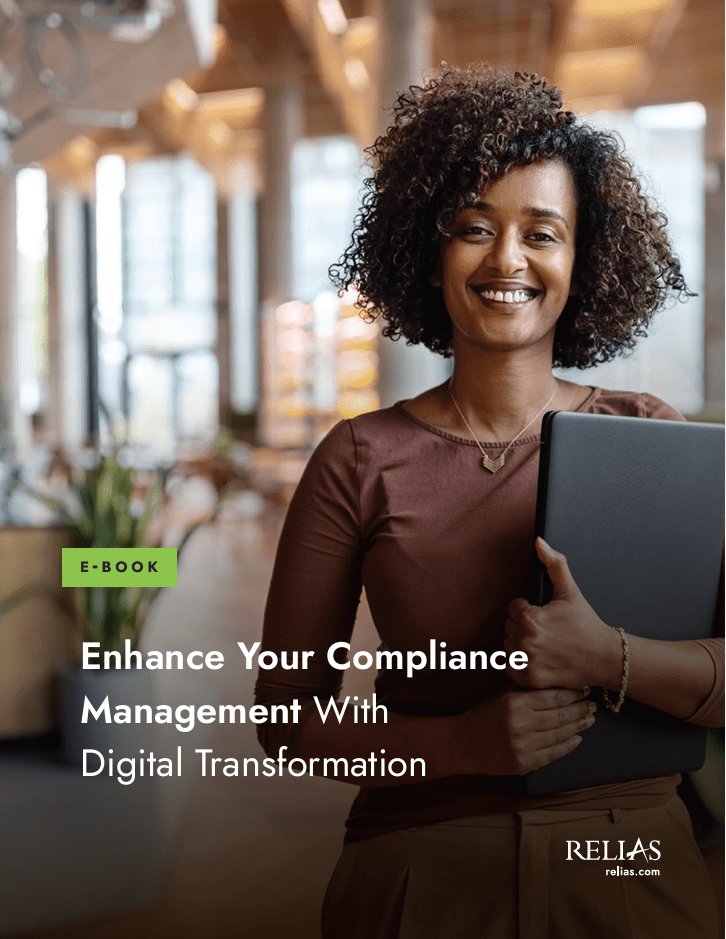
Enhance Your Compliance Management With Digital Transformation
Learning to digitize your compliance program will set up your organization for future ease and success. Read our e-book to learn about today’s compliance landscape, the benefits of digitizing, the seven elements of an effective compliance program, and how the Relias Compliance Pro Suite can help.
Download the e-book →
