






Healthcare providers are no strangers to service challenges — missed appointments, long wait times, communication breakdowns, or billing confusion are part of the everyday operational landscape. But in a patient-first world, it’s not the mistake that defines your organization — it’s how you recover from it. That’s why effective service recovery strategies are essential. When executed well, they can transform a moment of dissatisfaction into a powerful opportunity to build patient loyalty.
4 highly effective service recovery strategies
Service recovery is the process of identifying, addressing, and resolving negative experiences quickly and effectively. And with the right experience management tools in place, service recovery can become a powerful driver of patient trust, loyalty, and retention.
Here are four best practices for effective service recovery, enabled by modern experience management strategies.
1. Collect feedback in real time
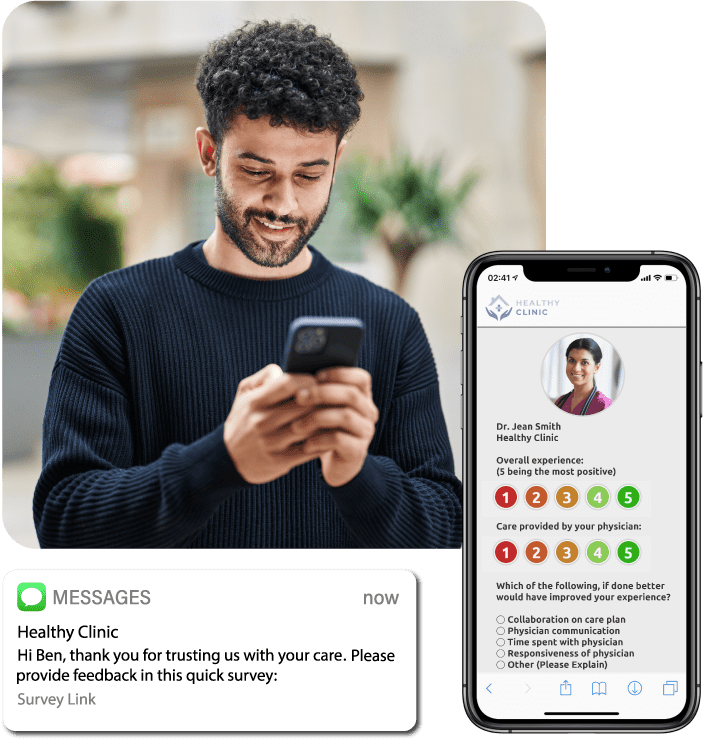
The first step in recovery is knowing a problem occurred. Relying solely on post-discharge surveys or online reviews means you’re reacting too late. Implementing real-time feedback tools — such as text-based surveys or digital kiosks — enables you to catch issues as they happen. These timely insights create a critical window of opportunity to follow up with patients before dissatisfaction turns into disengagement or negative public reviews.
2. Set clear response protocols
Experience management platforms allow you to set alerts based on low scores or flagged keywords (e.g., “rude,” “confused,” “pain”). But alerts are only useful if staff know what to do with them. Establish clear workflows that outline who receives alerts, who follows up, and how to document resolution efforts. Speed and consistency are key: a quick, empathetic response can make a lasting impression.
3. Empower staff to resolve issues at the front line
The most effective service recovery doesn’t require escalating issues to management. Train frontline staff to listen actively, apologize sincerely, and offer solutions within their control. Experience management tools can reinforce this training by surfacing trends — like frequent complaints about check-in delays — that help staff understand where to focus their improvement efforts.
4. Use feedback to drive long-term change
Not all service recovery is one-to-one. Over time, experience data reveals patterns: persistent pain points, gaps in communication, or breakdowns in handoffs. By aggregating and analyzing feedback, organizations can prioritize operational or cultural improvements that prevent issues from recurring. This not only enhances patient experience — it improves efficiency, staff satisfaction, and overall performance.
Final thoughts on service recovery strategies
In an era where one negative encounter can ripple across social media and patient communities, proactive service recovery is essential. Experience management gives healthcare organizations the insight and tools to respond with empathy, improve in real time, and build lasting patient loyalty — one experience at a time.

Improve Patient Experience and Drive Quality Outcomes
Relias Experience Management optimizes care improvement through real-time data insights, patient feedback, and prescriptive interventions to identify and close gaps in care delivery and patient experience.
Learn more →
