



In obstetric (OB) emergencies, every minute counts.
A delayed response or unpracticed skill may turn a manageable complication into tragedy. To reduce that risk, the Centers for Medicare and Medicaid Services (CMS) now require hospitals with obstetric services to prove readiness for high-risk events through the CMS Maternal Health Standards.
These standards focus on team readiness, simulation training, and ongoing competency assessment to ensure staff responds effectively under pressure. Even with limited resources, hospitals can strengthen preparedness through brief simulations and team debriefings that build confidence across disciplines. The goal is consistency—so every clinician, on every shift, knows how to respond when seconds count
More than 80% of pregnancy-related deaths in the U.S. are preventable. Yet many occur in hospitals that have the right policies and resources but lack consistent, team-based training—a challenge explored further in Relias’ blog, 7 Steps That Can Save Mothers’ Lives Now.
Consistent training also plays a critical role in reducing bias and disparities in maternal outcomes. Despite advances in care, major inequities persist—Black women in the U.S. experience maternal death rates of about 50 per 100,000 live births in 2023, and was significantly higher than rates for White (14.5), Hispanic (12.4), and Asian (10.7) women. Research links these differences to implicit bias, structural racism, and unequal systems of care. Standardized readiness and communication protocols help promote equitable care for every patient.
Building on that foundation, clinical educators and nursing leaders benefit from focusing training on the five CMS-aligned OB emergencies outlined below—those that present the highest risk and require the highest level of preparedness.
Aligning OB emergency training with CMS expectations
Under the CMS Maternal Health Standards, hospitals are asked to demonstrate that their staff can recognize and manage maternal complications quickly and effectively.
Key areas of focus include
- Routine education and simulation for OB emergencies
- Interdisciplinary participation in drills and debriefings
- Ongoing assessment of competence and clinical performance
Inconsistent adherence to these standards may increase exposure to clinical or regulatory review, particularly when outcomes reflect training gaps.
Hospitals may accelerate improvement by implementing Relias’ Obstetrics Clinical Solution, which delivers assessment-driven, personalized learning to OB clinicians, reducing variation in care and improving readiness across teams.
Five critical OB emergencies for hospital readiness
Postpartum hemorrhage (PPH): Early recognition and management
PPH remains one of the leading causes of maternal mortality. Early recognition and a structured, team-based response are essential to reduce morbidity and mortality.
Hospitals can strengthen readiness through simulation, role-based drills, and consistent use of evidence-based PPH risk assessment tools.
Hypertensive disorders and eclampsia: Preventing stroke and seizure
Hypertensive emergencies contribute significantly to preventable maternal deaths. Evidence-based clinical guidance emphasizes that immediate intervention for acute-onset severe hypertension during pregnancy or postpartum is critical to prevent complications such as stroke or seizure.
Readiness includes standardized treatment protocols, simulation training, and strong interprofessional communication to ensure timely escalation.
Shoulder dystocia: Time-critical maneuvers and team communication
Shoulder dystocia is unpredictable and requires a calm, practiced response.
Routine drills help teams perform essential maneuvers safely and collaborate effectively under pressure.
Maternal sepsis: Rapid diagnosis and escalation
Maternal sepsis develops quickly and requires fast recognition and escalation of care. Implementing standardized screening tools and response protocols significantly reduces severe morbidity.
Regular interdisciplinary training helps teams act immediately.
Unplanned cesarean or crash C-section: OR coordination and timing
When fetal distress requires surgical delivery, seconds matter. Defined team roles, structured communication, and rapid activation protocols improve outcomes.
Hospitals that incorporate these practices into simulation and debriefing processes, supported by blended learning solutions like Relias’ Obstetrics Clinical Solution enhance readiness and response efficiency.
How to spot gaps in OB emergency readiness
Even well-prepared hospitals discover gaps during real emergencies. Policies provide structure, but true readiness is revealed in performance under pressure. Teams that appear compliant on paper may falter when facing a rapid decline or unclear chain of command.
Common indicators of readiness gaps include:
- Delayed recognition of deterioration
- Missed or late activation of rapid response
- Inconsistent documentation
- Confusion during simulation
These gaps are opportunities for improvement. They reveal where coaching and scenario-based refreshers can strengthen team performance before outcomes are affected. Hospitals that treat readiness as an ongoing process—not just compliance—see stronger engagement and faster improvement. For real-world insights, view the Relias Maternal Mortality Survey Report.
Competency validation strategies
CMS guidance emphasizes demonstrating competence through observation, feedback, and data—not just attendance logs.
Effective strategies include:
- Skills checklists verified during simulations or observed care
- Interdisciplinary assessments evaluating how teams perform together
- Knowledge testing before and after sessions to track retention
- Structured debriefings that evaluate both technical and communication skills
Using Relias’ assessment-driven education tools helps hospitals measure judgment, personalize learning, and demonstrate compliance through benchmarked performance data.
Sustaining competence over time
Readiness isn’t a one-time achievement. It’s a continuous cycle of education, evaluation, and reinforcement supported by strong leadership and ongoing learning.
Practical strategies include:
- Annual revalidation tied to performance and outcomes
- Microlearning refreshers through shift huddles or e-learning
- Empowering OB champions on each shift to lead mini-drills
- Integrating simulation outcomes into reviews and dashboards
Hospitals enhance long-term performance with Relias’ blended learning and analytics-based competency programs, combining expert content, simulations, and benchmarking to support consistent team performance.
From compliance to confidence
From CMS compliance to bedside confidence, the goal remains the same: safe, coordinated care for every mother and baby. Hospitals that weave education, simulation, and validation into daily practice turn standards into habits and policies into performance.
When preparedness becomes part of everyday practice, competence grows, morale rises, and patient outcomes improve. That’s how teams move from compliance to confidence—and save lives together.

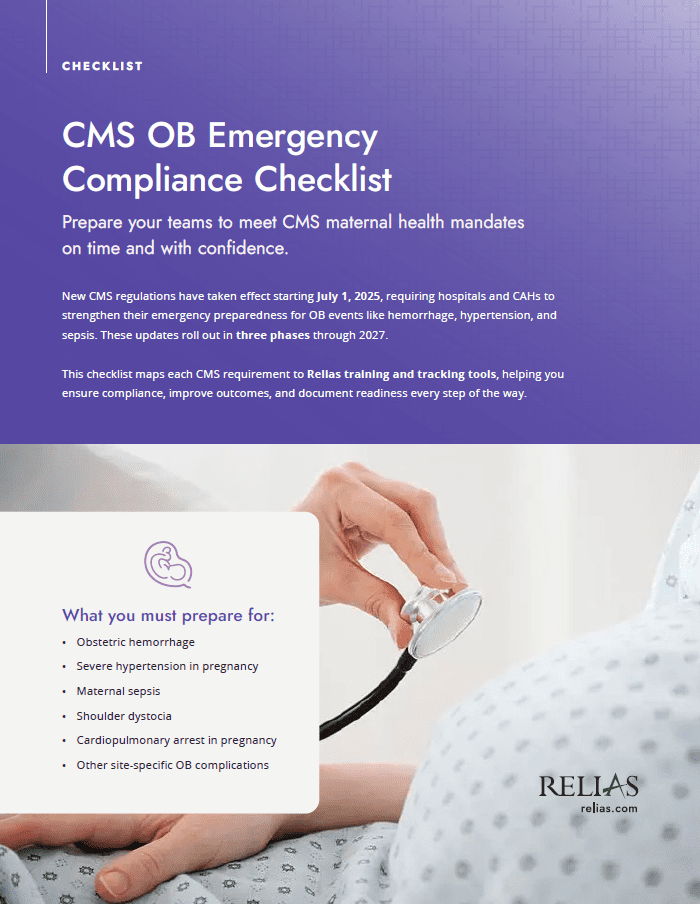
CMB OB Emergency Checklist
To help your organization assess and improve readiness, download the CMS OB Emergency Compliance Checklist, a practical guide to evaluate preparedness, identify gaps, and ensure every team member is ready when it matters most.
Download checklist →
