



Healthcare has experienced some of its greatest challenges over the past few years. Declining resources. Lagging patient engagement. A once-in-a-lifetime pandemic that rocked the very fabric of care delivery.
But one troubling trend within the industry has continued to rear its head for many years: widespread workforce burnout. Truthfully, this crisis started before COVID. In 2019, one Consensus Report by the National Academy of Medicine found over half of medical professionals experienced healthcare burnout. This pervasive pattern is only getting worse, with many clinical experts leaving the field as a result. An American Medical Association study revealed 40% of doctors plan on exiting their careers in the next two years.
It’s clear that providers must take concrete steps to address this snowballing issue. Let’s dive into some key contributors and how a better approach to patient surveys can help prevent healthcare burnout.
How can advanced patient surveys help prevent physician burnout?
A range of factors contribute to healthcare burnout. For instance, limited upward mobility within organizations can discourage clinicians. Demanding schedules leave caregivers with little time to decompress. The hierarchal nature of healthcare education could wear away at morale, while medical students strive to advance in their careers.
How is healthcare grappling with these contributors? Many practices have turned to more engaging residency programs. Others offer expanded opportunities for advancement. Some have even provided their clinical staff with complimentary wellness services.
Although these are all important steps, one often overlooked factor in supporting the healthcare workforce is lessening the operational friction clinicians and nurses face daily. Much of what underpins physician burnout lies in juggling tedious tasks, endless lists, and compliance measures with delivering high-quality care. It has worn away at the enthusiasm and passion that many professionals had when they entered the workforce.
The harsh truth is that manual surveys typical of the regulatory space in healthcare have added fuel to the fire. Sure, they’ve revolutionized care delivery. But they’ve also caused significant frustration for patients, multiplied attention-grabbing tasks for trained clinicians, and produced lagging insights often too outdated to trust.
Healthcare needs more innovative survey administration methods — methods that embrace digital-first and efficient modes for collecting, organizing, and using data. And methods built to make work simpler for clinicians — not busier.
When strategizing a best-in-class experience for your healthcare workforce that will reinforce efforts in physician and nurse retention, consider improving your patient experience surveys. A more advanced approach to listening to your patients can:
1. Eliminate some administrative work that pen-and-paper surveys require
Doctors have a lot of routine tasks on their plates. For instance, they spend 21% of their workdays on EHR (electronic health record) data input alone. Ultimately, few contributors to burnout are as significant as the burden clerical responsibilities place on medical professionals. In fact, in a recent Doximity poll, 46% of physicians cited reducing administrative work as the most effective way to mitigate burnout.
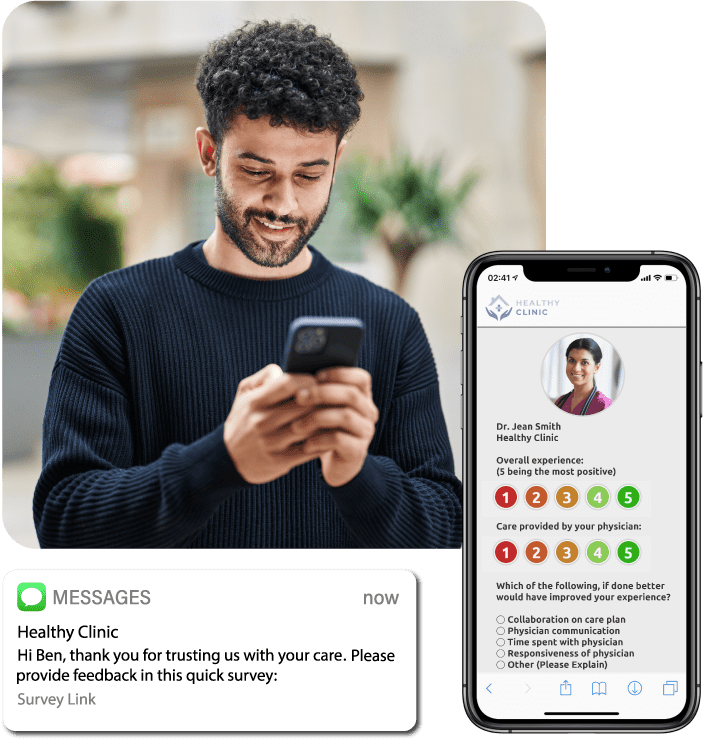
Classic pen-and-paper surveys only grow physicians’ and nurses’ to-do lists, requiring them to manually gather and catalog feedback from patients — and work with outside consultants just to glean insights from the information. Survey administration that uses text messaging and digital formats streamlines the entire process, automating patient data collection and organization.
2. Reinforce patient-provider relationships
Administrative burden isn’t just weighing down physicians and nurses. As caregivers spend more time on routine tasks and less time looking patients in the eye, their relationships with those they treat are wearing thin. In a Deloitte study, 70% of patients said their physicians lack compassion — a troubling finding that should worry every healthcare leader.
Embracing advancements in patient surveying can eliminate distractive busy work related to continuous listening, clearing the deck for doctors to put most of their focus toward their patients. And forward-thinking digital solutions like Relias take things a step further, automating several necessary steps before, during, and after visits — removing many operational concerns and making way for more engaging patient-provider interactions.
3. Empower clinicians with actionable data
As mentioned before, the status quo in patient surveying usually involves hiring a third-party consultancy to gather information and interpret results. But these outside firms often take weeks — or even months — to deliver providers cohesive results.
How can care teams effectively provide their patients with high-quality and personalized care without timely information? The simple answer is they can’t. Luckily, digital PX solutions that visualize these insights in real time empower healthcare workers to act when it matters most. Leveraging the most current PX information, physicians can understand where communication breakdowns are occurring and effectively address the exact issues their patients encounter during their experience, fostering more confidence in clinicians as they administer care.
4. Provide more regular, positive feedback to clinicians — in real time
In the quickly evolving world of healthcare, having real-time insights is invaluable. It emboldens medical professionals to address patient concerns, identify gaps, and rapidly respond to correct them effectively and soundly.
But when it comes to retaining your workforce, it’s important to understand the gravity of celebrating wins, not just assessing areas for improvement. That’s why some of the most innovative patient surveying technologies actively communicate positive patient feedback to physicians. Relias has found that 80% of the feedback collected in our system is positive and complementary in nature, and being able to seamlessly share this feedback from these patient surveys with staff in real time can prevent healthcare burnout and help reinforce why they do what they do. The best platforms in this space seamlessly convey these kudos to ensure care teams have a reason to celebrate on an ongoing basis, reinforcing initiatives in physician and nurse retention.
5. Improve the reputation of the organization that the clinicians and staff serve
People take pride in their work. It’s no different in healthcare. Clinical staff show up every day because they care for people, and they expect their dedication to compassionate and connected care to be reflected in the organization they serve.
With provider reviews taking on a more significant role in reputation management for doctors, having a modern, digital-forward patient survey strategy with real-time data collection is paramount. The more your care teams can quickly recover from gaps in patient experience, the better your organization’s reputation becomes — online and offline. Additionally, with Relias’ XM solution, you can rest assured that your most satisfied patients are seamlessly directed to leave reviews, increasing the quantity and rating of your organization and providers on online review sites and further boosting your team’s credibility with potential patients.
Leverage an innovative patient surveying strategy to prevent physician burnout
It’s not just patient experience that benefits from advanced surveys. The wellness and resilience of your workforce do, too. But only the most forward-thinking surveying strategies effectively support your clinical staff in finding joy in the workplace. That’s why teaming up with PX innovators like Relias is your best bet for improving satisfaction for all your key stakeholders.
Relias combines cutting-edge digital tools for surveying patients, gauging workforce satisfaction, elevating reputation management for doctors, and managing your online reputation all in one platform. See for yourself how Relias’ comprehensive solution can help you, based on evidence that better patient surveys can prevent healthcare burnout.

Improve Patient Experience and Drive Quality Outcomes
Relias Experience Management optimizes care improvement through real-time data insights, patient feedback, and prescriptive interventions to identify and close gaps in care delivery and patient experience.
Learn more →
