





In post-acute care, workforce competency directly impacts care quality, regulatory compliance, and patient outcomes. To ensure that employees are qualified at the time of hire and continue to develop their skills over time, post-acute care organizations must implement effective competency assessments and competency evaluations.
In a recent webinar, “Competency Made Clear: How Assessments and Evaluations Drive Compliance and Care Excellence,” hosted by Relias, industry experts Felicia Sadler, MJ, BSN, RN, CPHQ, LSSBB, Vice President of Quality at Relias, and Nikki Hehl, Senior Product Manager at Relias, shared insights into how competency assessments and competency evaluations can enhance compliance, improve patient safety, and support workforce retention.
Post-acute care organizations face significant challenges in maintaining a skilled workforce. With ongoing staff shortages, high turnover rates, and an increasing demand for quality care, ensuring your staff has the necessary skills and knowledge is essential.
Competency assessments vs. competency evaluations
The American Nurses Association defines competency as “an expected level of performance that integrates knowledge, skills, abilities, and judgment.”
While the following terms are often used interchangeably, they serve distinct purposes:
- Competency assessments (pre-hire) — Measure whether a candidate has the necessary knowledge, skills, and abilities before beginning work.
- Competency evaluations (ongoing performance) — Assess how well an employee meets role expectations over time, ensuring skill development and compliance with evolving care standards.
Regulatory drivers and competency standards
Compliance with federal and state regulations is a top priority for healthcare organizations. Whether it’s skilled nursing facilities, hospitals, or home health agencies, regulatory bodies require that healthcare providers demonstrate competency in delivering patient care.
For example, the Centers for Medicare and Medicaid Services (CMS) mandate facility assessments in long-term care facilities to ensure that staff competencies align with the needs of the patient population. Additionally, accrediting bodies emphasize the importance of competency verification as part of their quality standards.
“Ensuring that licensed nurses have the specific competency and skill sets necessary to care for residents’ needs is a key driver for regulatory compliance and quality care,” said Sadler.
Key competency tools for healthcare organizations
Beyond fulfilling regulatory requirements, competency assessments and evaluations allow you to proactively address skills gaps and enhance overall care quality.
Relias offers competency management tools that effectively assess, evaluate, and develop healthcare professionals. These tools include:
1. Competency assessments
Competency assessments provide an objective way to measure knowledge and skills. These assessments help organizations:
- Identify baseline competencies for new hires
- Determine training needs
- Monitor staff performance over time
For example, a registered nurse in a long-term care facility may take an assessment to evaluate their knowledge of infection control protocols upon hiring. Based on the results, you can provide targeted training to address any identified gaps.
2. Competency evaluations
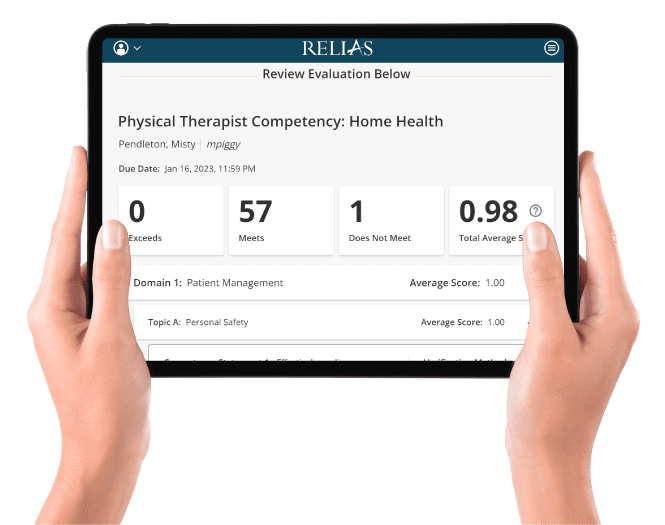
Competency evaluations focus on real-world applications. Rather than just testing knowledge, these evaluations measure how well employees apply their skills in a clinical setting. Key benefits include:
- Standardized evaluations for staff performance
- Digital tracking to replace outdated paper-based processes
- Customizable evaluation templates tailored to specific roles
By integrating competency evaluations into annual performance reviews, you can ensure that staff members maintain their skills and adapt to evolving best practices.
3. Skills checklists
Skills checklists offer a structured way to verify proficiency in specific tasks, such as:
- Administering medications
- Performing wound care
- Operating medical equipment
These checklists serve as a valuable resource for supervisors and trainers to confirm that employees meet competency standards at the point of care.
Why competency management matters
Investing in a competency management tool has tangible benefits for healthcare organizations. The return on investment (ROI) extends beyond compliance and risk mitigation — it also improves patient care, workforce retention, and operational efficiency.
1. Enhanced patient safety and satisfaction
The primary goal of competency management is to ensure that healthcare professionals provide safe and effective care. Competency gaps can lead to adverse events, hospital readmissions, and increased liability risks. You can reduce medical errors and improve patient satisfaction by proactively assessing and developing your staff.
2. Improved staff retention and engagement
LinkedIn’s 2025 Workplace Learning Report found that 88% of organizations are concerned about employee retention, and their number one retention strategy is providing learning opportunities.
A well-structured competency management program can significantly impact employee retention. “We know that improving healthcare professionals’ satisfaction can positively impact outcomes and improve retention. Providing a high-quality, competent clinical workforce can bring stability to a team and improve continuity on the team’s journey to clinical excellence,” said Sadler.
3. Regulatory readiness and compliance
Regulatory audits and surveys require documented evidence of staff competency. By leveraging digital competency tools, organizations can easily track and demonstrate compliance. Features like automated reporting and audit trails streamline the process, reducing administrative burdens.
Competency management is evolving, with technology playing a crucial role in streamlining assessments and evaluations. Digital tools provide real-time data, enabling healthcare organizations to:
- Make informed workforce decisions
- Personalize staff development plans
- Standardize competency measurement across multiple locations
In post-acute care, delivering high-quality, compliant care hinges on having a competent and confident workforce. Competency assessments help ensure that new hires are qualified, while competency evaluations promote ongoing skill development and compliance. When used together, these processes reduce turnover, improve job satisfaction, and drive care excellence, ultimately benefiting your organization and your patients.

Competency Made Clear: How Assessments and Evaluations Drive Compliance and Care Excellence
Explore the critical differences between competency assessments (pre-hire) and competency evaluations (ongoing performance) and how each contributes to building a skilled and confident healthcare workforce.
Watch the webinar →
